Saturday, 4 September 2021

RORATE CÆLI: AUDI, ISRAËL: Jewish Feasts in the Propers of the Traditional Roman Rite

RORATE CÆLI: AUDI, ISRAËL: Jewish Feasts in the Propers of the Traditional Roman Rite

AUDI, ISRAËL: Jewish Feasts in the Propers of the Traditional Roman Rite

by Alisa Kunitz-Dick


Christ unrolls the scroll at the Synagogue at Nazareth [Lk. 4]
James Tissot (c. 1890), Brooklyn Museum

Several weeks ago, Fr Albert Marcello wrote of the commemoration (in the nontechnical sense of the word) of Tisha B'Av within the propers at Mass.  What Fr Marcello noticed is not an isolated incident.  There are a number of commemorations of holidays from the Jewish calendar in the propers of the ancient Latin liturgy, which do not appear in the Novus Ordo.   


I have complied a list of all of the ones that I have noticed, and explain in bold how they correspond to the holiday, if it is not obvious.  Altogether there are commemorations of all the major Jewish Holy Days and feasts, roughly at the same time they occur in the Jewish calendar, with the exception of Chanukkah.  I do not know, from an historical perspective, when each of these entered the Roman rite, but perhaps there is a liturgical historian out there who would be able to explain [1]. 


The feasts are, as follows:


1.  Rosh Hashanah [The New Year]

Feria Quarta Quattuor Temporum Septembris 
Introitus
Ps 80:2; 80:3; 80:4; 80:5
Exsultáte Deo, adiutóri nostro: iubiláte Deo Iacob: súmite psalmum iucúndum cum cíthara: cánite in inítio mensis tuba, quia præcéptum in Israël est, et iudícium Deo Iacob.  [This refers to the blowing of the shofar, a ram's horn, at Rosh Hashanah.]
Ps 80:6
Testimónium in Ioseph pósuit illud, cum exíret de terra Ægýpti: linguam, quam non nóverat, audívit.
V. Glória Patri, et Fílio, et Spirítui Sancto.
R. Sicut erat in princípio, et nunc, et semper, et in sǽcula sæculórum. Amen.

Exsultáte Deo, adiutóri nostro: iubiláte Deo Iacob: súmite psalmum iucúndum cum cíthara: cánite in inítio mensis tuba, quia præcéptum in Israël est, et iudícium Deo Iacob.

Introit from Wednesday in the September Ember Days                                              Ps 80:2-5
Sing joyfully to God our strength; acclaim the God of Jacob. Take up a pleasant psalm with the harp; blow the trumpet in the beginning of the month; for it is a statute in Israel, an ordinance of the God of Jacob.  .  [This refers to the blowing of the shofar, a ram's horn, at Rosh Hashanah.]

Ps 80:6
He made it a decree for Joseph, when he came forth from the land of Egypt: he heard an unfamiliar speech.
V. Glory be to the Father, and to the Son, and to the Holy Ghost.
R. As it was in the beginning, is now, and ever shall be, world without end. Amen.
Sing joyfully to God our strength; acclaim the God of Jacob. Take up a pleasant psalm with the harp; blow the trumpet in the beginning of the month; for it is a statute in Israel, an ordinance of the God of Jacob.


Graduale
Ps 112,5-7
Quis sicut Dóminus, Deus noster, qui in altis hábitat, et humilia réspicit in cœlo et in terra?   [God is honoured as King of the Universe, which is an important theme on Rosh Hashanah]
V. Súscitans a terra ínopem et de stércore érigens páuperem.

Gradual
Ps 112:5-7
Who is like the Lord, our God, Who is enthroned on high and looks upon the heavens and the earth below? [
God is honoured as King of the Universe, which is an important theme on Rosh Hashanah]
V. He raises up the lowly from the dust; from the dunghill He lifts up the poor.

Communio
Neh 8:10
Comédite pínguia et bíbite mulsum, et míttite partes his, qui non præparavérunt sibi: sanctus enim dies Dómini est, nolíte contristári: gáudium étenim Dómini est fortitúdo nostra.  [It is a custom to eat sweet things, such as an apple dipped in honey or honey-cakes for a sweet New Year.]

Communio
2 Esd. 8:10
Eat fat meats, and drink sweet wine, and send portions to those who have not prepared for themselves: because it is the holy day of the Lord, be not sad, for the joy of the Lord is our strength.  
[It is a custom to eat sweet things, such as an apple dipped in honey or honey-cakes, for a sweet New Year.]


2.  Yom Kippur [The Day of Atonement]


Sabbato Quattuor Temporum Septembris
Lectio
Léctio libri Levítici.
Levit 23:26-32
In diébus illis: Locútus est Dóminus ad Móysen, dicens: Décimo die mensis huius séptimi, dies expiatiónum erit celebérrimus, et vocábitur sanctus: affligetísque ánimas vestras in eo, et offerétis holocáustum Dómino. Omne opus servíle non faciétis in témpore diéi huius: quia dies propitiatiónis est, ut propitiétur vobis Dóminus, Deus vester. Omnis ánima, quæ afflicta non fúerit die hac, períbit de pópulis suis: et quæ óperis quídpiam fécerit, delébo eam de pópulo suo. Nihil ergo óperis faciétis in eo: legítimum sempitérnum erit vobis in cunctis generatiónibus et habitatiónibus vestris. Sábbatum requietiónis est, et affligétis ánimas vestras die nono mensis: a véspera usque ad vésperam celebrábitis sábbata vestra: dicit Dóminus omnípotens.
R. Deo grátias.

Graduale
Ps 78:9; 78:10
Propítius esto, Dómine, peccátis nostris: ne quando dicant gentes: Ubi est Deus eórum?
V. Adiuva nos, Deus, salutáris noster: et propter honórem nóminis tui, Dómine, líbera nos.


Lesson from Saturday in the September Ember Days
Lesson from the book of Leviticus
Lev 23:26-32
In those days, the Lord said to Moses, The tenth of this seventh month is the Day of Atonement; it shall be most solemn, and shall be called holy; and you shall mortify yourselves on that day and offer an oblation to the Lord. On this day you shall not do any work, because it is the Day of Atonement, when atonement is made for you before the Lord, your God. Anyone who does not mortify himself on this day shall be cut off from his people; and if anyone does any work on this day, I will remove him from the midst of his people. This is a perpetual statute for you and your descendants wherever you dwell: you shall do no work, but shall keep a Sabbath of complete rest and mortify yourselves. Beginning on the evening of the ninth of the month, you shall keep this Sabbath of yours from evening to evening, says the Lord almighty.
R. Thanks be to God.

Gradual
Ps 78:9-10
Pardon our sins, O Lord; why should the nations say, Where is their God?
V. Help us, O God our Saviour; because of the glory of Your name, O Lord, deliver us.


[The lesson offers a short description of Yom Kippur, and the gradual relates an aspect of Yom Kippur, which is asking pardon for sins.]


3.  Sukkot [The Feast of Tabernacles]

Sabbato Quattuor Temporum Septembris
Lectio
Léctio libri Levítici.
Levit 23:39-43
In diébus illis: Locútus est Dóminus ad Móysen, dicens: A quintodécimo die mensis séptimi, quando congregavéritis omnes fructus terræ vestræ, celebrábitis ferias Dómini septem diébus: die primo et die octávo erit sábbatum, id est réquies. Sumetísque vobis die primo fructus arbóris pulchérrimæ, spatulásque palmárum, et ramos ligni densárum fróndium, et sálices de torrénte, et lætabímini coram Dómino, Deo vestro. Celebrabitísque sollemnitátem eius septem diébus per annum: legítimum sempitérnum erit in generatiónibus vestris. Mense séptimo festa celebrábitis, et habitábitis in umbráculis septem diébus. Omnis, qui de génere est Israël, manébit in tabernáculis: ut discant pósteri vestri, quod in tabernáculis habitáre fécerim fílios Israël, cum edúcerem eos de terra Ægýpti. Ego Dóminus, Deus vester.
R. Deo grátias.

Communio
Levit 23:41; 23:43
Mense séptimo festa celebrábitis, cum in tabernáculis habitáre fécerim fílios Israël, cum edúcerem eos de terra Ægýpti, ego Dóminus, Deus vester.


Communio
Lev 21:41, 43
In the seventh month you shall keep this feast, as I made the Israelites dwell in booths, when I led them out of the land of Egypt. I, the Lord, am your God.


Lesson from Saturday in the September Ember Days
Lesson from the book of Leviticus
Lev 23:39-43
In those days, the Lord said to Moses, On the fifteenth day, then, of the seventh month, when you have gathered in the produce of the land, you shall celebrate a pilgrim feast of the Lord for a whole week. The first and the eighth day shall be days of complete rest. On the first day you shall gather foliage from majestic trees, branches of palms and boughs of myrtles and of valley poplars, and then for a week you shall make merry before the Lord, your God. By perpetual statute for you and your descendants you shall keep this pilgrim feast of the Lord for one whole week in the seventh month of the year. During this week you shall dwell in bowers; every native Israelite among you shall dwell in booths, that your descendants may realize that, when I led the Israelites out of the land of Egypt, I made them dwell in booths. I, the Lord, am your God.
R. Thanks be to God.


4.  Purim [Esther's Feast-day.  At Purim there is the custom of the reading of the Megillah, which is the book of Esther, and this is also what is done here.]

Feria Quarta infra Hebdomadam II in Quadragesima

Lectio
Léctio libri Esther.
Esth 13:8-11; 13:15-17
In diébus illis: Orávit Mardochǽus ad Dóminum, dicens: Dómine, Dómine, Rex omnípotens, in dicióne enim tua cuncta sunt pósita, et non est, qui possit tuæ resístere voluntáti, si decréveris salváre Israël. Tu fecísti cœlum et terram, et quidquid cœli ámbitu continétur. Dóminus ómnium es, nec est, qui resístat maiestáti tuæ. Et nunc, Dómine Rex, Deus Abraham, miserére pópuli tui, quia volunt nos inimíci nostri pérdere, et hereditátem tuam delére. Ne despícias partem tuam, quam redemísti tibi de Ægýpto. Exáudi deprecatiónem meam, et propítius esto sorti et funículo tuo, et convérte luctum nostrum in gáudium, ut vivéntes laudémus nomen tuum, Dómine, et ne claudas ora te canéntium, Dómine, Deus noster.
R. Deo grátias.


Lesson from Wednesday in the Second Week of Lent
Lesson from the book of Esther
Esther 13:8-11; 15-17.
In those days, Mardochai prayed to the Lord, saying, O Lord, Lord, almighty King, for all things are in Your power, and there is none that can resist Your will, if You determine to save Israel. You have made heaven and earth, and all things that are under the cope of heaven. You are Lord of all, and there is none that can resist Your Majesty. And now, O Lord, O King, O God of Abraham, have mercy on Your people, because our enemies resolve to destroy us, and extinguish Your inheritance. Despise not Your portion, which You have redeemed for Yourself out of Egypt. Hear my supplication, and be merciful to Your lot and inheritance, and turn our mourning into joy, that we may live and praise Your Name, O Lord, and shut not the mouths of those who sing to You, O Lord our God.
R. Thanks be to God.


Graduale  [Reiterates the theme of the epistle]
Ps 27:9; 27:1
Salvum fac pópulum tuum, Dómine, et bénedic hereditáti tuæ.
V. Ad te, Dómine, clamávi: Deus meus, ne síleas a me, et ero símilis descendéntibus in lacum.


Gradual   [Reiterates the theme of the epistle]
Ps 27:9, 1
Save Your people, O Lord, and bless Your inheritance.
V. To You, O Lord, I call; O my God, be not deaf to me, lest I become one of those going down into the pit.


5. Pesach [Passover]

There is, of course, a correlation between Pesach and Easter.  The texts of the Easter Vigil, among other places, are self-explanatory.  These correspondences also occur in the Novus Ordo.


6. Shavuot [or Pentecost, which in the Jewish calendar celebrates the tithing of the first-fruits, and the giving of the law at Sinai]

Dominica Pentecostes

Offertorium
Ps 67:29-30
Confírma hoc, Deus, quod operátus es in nobis: a templo tuo, quod est in Ierúsalem, tibi ófferent reges múnera, allelúia.  [see the readings about the first-fruits below: another reiteration of the theme]


Offertory from Pentecost 
Ps 67:29-30
Confirm, O God, what You have wrought in us; from Your temple, which is in Jerusalem, kings shall offer gifts to You. Alleluia. [see the readings about the first-fruits below: another reiteration of the theme]


Feria Sexta Quattuor Temporum Pentecostes

Lectio
Léctio Ioélis Prophétæ
Ioël 2:23-24; 2:26-27
Hæc dicit Dóminus Deus: Exsultáte, fílii Sion, et lætámini in Dómino, Deo vestro: quia dedit vobis doctórem iustítiæ, et descéndere fáciet ad vos imbrem matutínum et serótinum, sicut in princípio. Et implebúntur áreæ fruménto et redundábunt torculária vino et óleo. Et comedétis vescéntes et saturabímini, et laudábitis nomen Dómini, Dei vestri, qui fecit mirabília vobíscum: et non confundátur pópulus me us in sempitérnum. Et sciétis, quia in médio Israël ego sum: et ego Dóminus, Deus vester, et non est ámplius: et non confundétur pópulus me us in ætérnum: ait Dóminus omnípotens.

4

Lesson from Friday in the Pentecost Ember Days
Lesson from the book of Joel
Joel 2:23-24; 26-27
Thus says the Lord God: O children of Sion, exult and rejoice in the Lord, your God! He has given you the teacher of justice: He has made the rain come down for you, the early and the late rain as before. The threshing floors shall be full of grain and the vats shall overflow with wine and oil. You shall eat and be filled, and shall praise the name of the Lord, your God, because He has dealt wondrously with you; My people shall nevermore be put to shame. And you shall know that I am in the midst of Israel; I am the Lord, your God, and there is no other; My people shall nevermore be put to shame, says the Lord almighty.


Sabbato Quattuor Temporum Pentecostes

Lectio
Léctio libri Levítici
Lev 23:9-11; 23:15-17; 23:21
In diébus illis: Locútus est Dóminus ad Móysen, dicens: Lóquere fíliis Israël, et dices ad eos: Cum ingréssi fuéritis terram, quam ego dabo vobis, et messuéritis ségetem, ferétis manípulos spicárum, primítias messis vestræ ad sacerdótem: qui elevábit fascículum coram Dómino, ut acceptábile sit pro vobis, áltero die sábbati, et sanctificábit illum. Numerábitis ergo ab áltero die sábbati, in quo obtulístis manípulum primitiárum, septem hebdómadas plenas, usque ad álteram diem expletiónis hebdómadæ séptimæ, id est, quinquagínta dies: et sic offerétis sacrifícium novum Dómino ex ómnibus habitáculis vestris, panes primitiárum duos de duábus décimis símilæ fermentátæ, quos coquétis in primítias Dómini. Et vocábitis hunc diem celebérrimum atque sanctíssimum: omne opus servíle non faciétis in eo. Legítimum sempitérnum erit in cunctis habitáculis et generatiónibus vestris: dicit Dóminus omnípotens.


Lesson from Saturday in the Pentecost Ember Days
Lesson from the book of Leviticus
Lev. 23:9-11; 15-17, 21.
In those days, the Lord spoke to Moses, saying: Speak to the Israelites and tell them: When you come into the land which I am giving to you, and reap your harvest, you shall bring a sheaf of the first fruits of your harvest to the priest, who shall wave the sheaf before the Lord that it may be acceptable for you, and shall sanctify it. On the day after the Sabbath the priest shall do this. Beginning with the day after the Sabbath, the day on which you bring the wave-offering sheaf, you shall count seven full weeks, and then on the day after the seventh week, the fiftieth day, you shall present the new cereal offering to the Lord. For the wave-offering of your first fruits to the Lord, you shall bring with you from wherever you live two loaves of bread made of two tenths of an epha of fine flour and baked with leaven. On this same day you shall by proclamation have a sacred assembly, and no sort of work may be done. This shall be a perpetual statute for you and your descendants wherever you dwell, says the Lord almighty.


Lectio
Léctio libri Deuteronómii
Deut 26:1-3; 7-11.
In diébus illis: Dixit Moyses fíliis Israël: Audi, Israël, quæ ego præcípio tibi hódie. Cum intráveris terram, quam Dóminus, Deus tuus, tibi datúrus est possidéndam, et obtinúeris eam atque habitáveris in ea: tolles de cunctis frúgibus tuis primítias, et pones in cartállo, pergésque ad locum, quem Dóminus, Deus tuus, elégerit, ut ibi invocétur nomen eius: accedésque ad sacerdótem, qui fúerit in diébus illis, et dices ad eum: Profíteor hódie coram Dómino, Deo tuo, qui exaudívit nos, et respexit humilitátem nostram et labórem atque angústiam: et edúxit nos de Ægýpto in manu forti et bráchio exténto, in ingénti pavóre, in signis atque porténtis: et introdúxit ad locum istum, et trádidit nobis terram lacte et melle manántem. Et idcírco nunc óffero primítias frugum terræ, quam Dóminus dedit mihi. Et dimíttes eas in conspéctu Dómini, Dei tui, et adoráto Dómino, Deo tuo. Et epuláberis in ómnibus bonis, quæ Dóminus, Deus tuus, déderit tibi.


Lesson
Lesson from the book of Deuteronomy
Deut. 26:1-3; 7-11.
In those days, Moses said to the Israelites: Hear, O Israel, the things that I command you today. When you have come into the land which the Lord, your God, is giving you as a heritage, and have occupied it and settled in it, you shall take the first of all your fruits, and putting them in a basket, you shall go to the place which the Lord, your God, chooses for the dwelling place of His name. There you shall go to the priest in office at that time and say to him, Today I acknowledge the Lord, your God, Who heard our cry and saw our affliction, our toil and our oppression. He brought us out of Egypt with His strong hand and outstretched arm, with terrifying power, with signs and wonders; and bringing us into this country, He gave us this land flowing with milk and honey. Therefore, I have now brought you the first fruits of the products of the soil which the Lord has given me. And having set them before the Lord, your God, you shall bow down in His presence. Then you shall make merry over all these good things which the Lord, your God, has given you.


7.  Tisha B'Av [a fast-day commemorating the destruction of the first and second temples]

            Dominica IX Post Pentecosten

Evangelium

Luc 19:41-47
In illo témpore: Cum appropinquáret Iesus Ierúsalem, videns civitátem, flevit super illam, dicens: Quia si cognovísses et tu, et quidem in hac die tua, quæ ad pacem tibi, nunc autem abscóndita sunt ab óculis tuis. Quia vénient dies in te: et circúmdabunt te inimíci tui vallo, et circúmdabunt te: et coangustábunt te úndique: et ad terram prostérnent te, et fílios tuos, qui in te sunt, et non relínquent in te lápidem super lápidem: eo quod non cognóveris tempus visitatiónis tuæ. Et ingréssus in templum, cœpit eiícere vendéntes in illo et eméntes, dicens illis: Scriptum est: Quia domus mea domus oratiónis est. Vos autem fecístis illam speluncam latrónum. Et erat docens cotídie in templo.

6

Gospel from the 9th Sunday after Pentecost
Luke 19:41-47
At that time, when Jesus drew near to Jerusalem and saw the city, He wept over it, saying, If you had known, in this your day, even you, the things that are for your peace! But now they are hidden from your eyes. For days will come upon you when your enemies will throw up a rampart about you, and surround you and shut you in on every side, and will dash you to the ground and your children within you, and will not leave in you one stone upon another, because you have not known the time of your visitation. And He entered the temple, and began to cast out those who were selling and buying in it, saying to them, It is written, 'My house is a house of prayer,' but you have made it a den of thieves. And He was teaching daily in the temple.


[1] All of the quotations have been taken from divinumofficium.com, from the 1960 rubrics.

Wherein a priest alumnus of the North American College responds. Wherein Fr. Z rants. | Fr. Z's Blog

Wherein a priest alumnus of the North American College responds. Wherein Fr. Z rants. | Fr. Z's Blog

Wherein a priest alumnus of the North American College responds. Wherein Fr. Z rants.

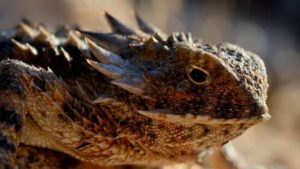
This is NOT a representation or subtle comment on the writer. Keep reading and you'll get why there is a picture of a Horned Lizard here.

From an alumnus of the North American College (US seminary in Rome) … edited so that the style of writing can't be traced to any one priest by those who might recognize it.

As a NAC grad, I read your article [HERE] with interest.

I disagree that a student will get in trouble for googling the Latin Mass and related material.

Things that will get a seminarian in trouble are wearing a cassock, biretta, or bad mouthing Conciliar theology or the Vatican II liturgy in public.

Men who show openly an affinity for pre-Conciliar 'look' make formators nervous.

I work with priests who are fans of the usus antiquior.  It's not their interest in that liturgical form that gets them in trouble.  What gets them in trouble are firm statements on faith or morals.  They are black and white and might polarize the faithful.  What gets them in trouble is a biretta, which can really anger some of the older Vatican II clergy.

Or what get's them in trouble is their 'obsession' with using a one thousand year old document, the Summa Theologiae, as a catechetical resource.

That's what gets them in trouble.

"What gets them in trouble are firm statements on faith or morals…."

That's it in one.

Liturgy is doctrine, of course.  And we are our rites.

The enemies of Tradition might not always be very bright or well-formed, but they sense the truth of that connection of doctrine and worship viscerally and they react in nasty ways, rather like the Horned Lizard which literally shoots blood from its eyes as a defensive instinct.

Yes, experience informs that this is a pretty good analogy.

Birettas and Latin trigger that generation.

They were conditioned in those halcyon days of change and revolution, protests and the "spirit" and liberation, all oozing together in the ambient of the Church and COUNCIL, to the point that they fused into a kind of mythic icon.

The sight of a biretta, a black chasuble, ad orientem, triggers violent flashbacks, sends them back to their roots of protest and change.

When they see younger priests embracing those things they threw away, literally into dumpsters, they feel threatened and become defensive. Many of them sense in the younger generation's desire for tradition an implicit attack on their own persons, on their priestly identity (resting on whatever sort of foundation), a criticism of their whole life's work. So they lash out.

In a sense, they are not wrong that the embrace of Tradition by younger priests is an implicit criticism of their life's work. That's because what they strove to build after Vatican II didn't have the desired effect. In fact, looking around at the Church, on the level of statistics, it was a real failure.

We can blame them and not blame them.  They weren't and aren't perfect.  No priests are.  Most of them put their backs into doing what they were told.   The real blame, the blamable blame, lies with a few.

Most of our now older priests were absolutely sincere in what they did. They were good priests and they were formed in their particular time.  But a lot of their work, in the end, didn't work, objectively.   Yes, yes… there are many factors.  Blah blah blah.  But as bishops and priests go, the Church will go, to the point where St. Jean Eudes' dire admonishment kicks in.

It stings these older men to suggest that maybe we ought to go back a few squares, and rethink our path.

The younger guys don't intend to stick a finger in their eye. That's not their intention in becoming more "trad".   They just don't have the baggage of the previous waves of priests. They are simply not as invested in that chimeric 'spirit' of the Council and those oh so halcyon days.   Those aren't their own days!   These are their days!  For them, The Council was just a Council, along with a bunch of other Council's in a chain of continuity that doesn't cancel out the value of the previous Councils.  These younger men just want to have their patrimony – all of it, and not just the part that started on 11 October 1962 onward – and get on with things, do their priestly, pastoral work.  They just want to be priests and do things that actually work, not just repeat the obviously failed experiments of the past.

If some few do want to rub it in the face of their older brethren, well… shame on them. Thanks, guys, you few, you unhappy few, for betraying our cause by your willful imprudence.

The vast majority of priests who want Tradition simply want to get on with things, the more the merrier: "Join us, please! We will welcome you. Give us a hand." Or, at least, "If not, please leave us alone. Don't mess with our joy."

I've made this comparison before.

Say you are in Chicago and you want to drive to New York. You set out and drive for a long time. Suddenly, thinking you were drawing nearer to Empire State you see a sign saying "Kansas Welcomes You!" What do you do? Do you keep driving in the same direction? Not if you really desire to get to New York. No. Commonsense dictates that you do a U-turn and head the other direction until you start see welcome signs for Eastern states. That's the smart course. It would be stupid to continue driving in the opposite direction once you know you have strayed. Let's add to this the fact that you have put on your car a sign, "NEW YORK OR BUST!" You pull into the gas station in Kansas to fuel up and the guy there says, "Hey, didn't you come in from the East? Buddy, you are going in the wrong direction!" You pay him and start to pull out onto the road, again toward the West. The guy runs out waving his arms, shouting, "HEY! THAT WAY! NEW YORK IS THAT WAY!" But, no. You are on your path.

For these older guys who committed to what they committed in the 60s, 70s, 80s, the sight of a growing congregation at a Traditional Latin Mass is like hot coals on their forehead.  But they've got those thinning white-knuckled  hands locked onto the steering wheel and, by gum, they're not turning the car back.

For this reason, some of them, sad to say, would rather drive off a cliff than turn around.  They would rather destroy a thriving, growing community of happy, zealous young Catholics than let it grow.  Instead of joining them, or at least benignly watching from afar, they'll run over them with the car on the way to the cliff's edge.

Because, in the end, it's all about them.

We can and must act, in charity, in the face of this new round of challenges.

Sunday, 29 August 2021

RORATE CÆLI: Cancelling Pope Benedict: Reflections on a recent article and the “hermeneutic of rupture”

RORATE CÆLI: Cancelling Pope Benedict: Reflections on a recent article and the "hermeneutic of rupture"

Cancelling Pope Benedict: Reflections on a recent article and the "hermeneutic of rupture"

Rorate has received this excellent essay by "A Concerned Priest" and is pleased to share it with our readers. It is one of the best analyses to date of the impossible theological premises on which Pope Francis has enacted his campaign against the survival of the traditional rites of the Church.

Professor Martin Madar has written in La Croix (August 9, 2021) a revealing article concerning the larger project represented by Traditionis Custodes. It bears the title "Pope Francis should correct his predecessor on another point."[0] The project here is one to which all Catholics, especially bishops, should pay close attention because it reveals what is really at stake in the current debates about the future of the traditional Mass. It is not so much the individual author who matters: he stands in for an ecclesiastical party that is very prominent today; were it otherwise, Catholics outside the ivory tower could just ignore this article and others like it.

Thursday, 19 August 2021

RORATE CÆLI: The Two Women: Sermon for the Assumption of the Blessed Virgin Mary

RORATE CÆLI: The Two Women: Sermon for the Assumption of the Blessed Virgin Mary

The Two Women: Sermon for the Assumption of the Blessed Virgin Mary

"And Mary said:  'My soul doth magnify the Lord, and my spirit rejoiceth in God my savior.'"  (Luke 1:46)


Two women:  so different, yet women, these two women whose role in the destiny of the human race have been pivotal. Their importance transcends that of any mere man who has paraded across the pages of history.  Compared to these two women, pharaohs, emperors, kings, Wall Street whizzes, tech giants:  whatever the power on the stage of history, nothing compares with these two women.  Secular feminism is blind to all of this, for whatever is purely secular is blind to the reality of the spiritual, is blind to that Spirit that blows through humankind from the beginning, that Spirit that brooded over the waters, that Spirit that gave the amorphous lump of clay life and called him Adam.

Two women: our lives, our futures, depend on them.  The first has been consigned by those who claim to know such things to the realm of myth, out of the reach of the real.  But to know how very real this woman was and how very real her stamp on the whole human race, one could not do better than go to the church of Santa Maria del Carmine in Florence and look at the awesome Masaccio frescoes there.  Look on the left, and there, in an unforgettable depiction, is the woman.  She is naked and she walks beside the man.  But it is her face, a face that once seen is never forgotten.  Her eyes are empty sockets; they are black.  And the expression on her face is a grief that is as deep as the universe. Compared to this grief, the grief of the great Greek tragic heroines—Medea, Antigone, Clytemnestra, Iocasta—is nothing.  This woman's grief envelopes all of creation, for it is her act of disobedience that banished her and her man, he who fell no less easily, he who walks beside her in dazed apprehension of what lies beyond the paradise of Eden.  But it is her horror at the darkness that lies before her—this is what leaps out of Masaccio's fresco, not merely because he is a great artist, but because the horror is there.  For what Eve saw in the blackness of her sight was not only pain and anxiety and loneliness and disconnectedness—she saw death.  And she wept the tears of all creation.

The other woman. Go to the church of Santa Maria Gloriosa de'Frari in Venice.  You enter the church by the side, one of the transepts. The church is Gothic, but it is Italian gothic, so different from the gothic of the French and English churches.  But there it is with its pointed arches and its very high nave.  You advance to the opening in the choir screen that separates the nave from the choir of the Friars and the sanctuary and high altar.  But you pause, and you must pause. For what is seen in that opening cannot be approached casually, cannot be looked at as if you were looking at just one painting over the high altar in an Italian church.  And so you walk slowly, and now there is the opening in the screen, and you turn and you look, and there is the amazing painting in the distance that surprises you and takes your breath away, no matter how many times you have seen it in its setting.  You walk through the friars' choir to see the painting more closely.  Where there was darkness in the eyes of the first woman, where was that grief that knows no limit to its depths, where there was that sorrow that knows no end:  here there is light, a light that seems to come out of the very painting that dominates the whole space over the high altar, the altar framed by the screen separating the nave from the sanctuary, earth from heaven.

Whence comes the light?  The light comes from above.  In the Masaccio fresco there is no above, but here the light is intense and from above, and it envelopes the woman.  There are the little angels, the putti, gently guiding the woman in her ascent to the light, in the light. The apostles look up, amazed and yet not surprised, for what else could be expected for the one who as an immaculate Virgin bore God in the flesh—what else could be expected than that she would be borne at the end of her life on earth body and soul into heaven in her totality as a woman.  No disembodied soul this. No this is the woman, clothed in a red so distinctive, so compelling that it bears the name of its creator artist, Titian red, as she looks up, anticipating, knowing the fullness of life, knowing the love of her Son, knowing the love of God that draws her up into the infinity of God, her face open, no false, sentimental piety here, her face open to the light that suffuses her, the light that matches her purity and holiness, the Light that came into the world and the world knew it not, the world that sees with the eyes of the first woman, the world that is blind, the world whose eye sockets are empty, void. 

And yet, it is in this woman full of grace, it is in her assumption into heaven, body and soul, that is seen the destiny of those who see this Light, who are drawn into this Light that is life itself, who live by this Light, those who are in the world but not of the world, those who believe in her Son as the Resurrection and the Life: it is this woman's assumption that those who believe see their own destiny in the Resurrection on the last day.  For as the first woman caused the gates of heaven to be barred, closed, shut, so now this woman not only opens those gates, but makes the possibility of heaven real, real for you, real for me, real for all who are flesh and blood, for all who hear and believe those words: " he who eats my flesh and drinks my blood will have eternal life."

And while it is true that Mary's Assumption into heaven is a singular privilege, for there is no other human being in the history of the world who plays the role she does in our salvation as the new Eve, as the bearer of God, as the mother of the Savior:  what is a fact for Mary, her being in heaven body and soul, as a total person, is what is our hope for ourselves. For it is our resurrection that we look forward to. It is the fruit of our redemption in Jesus Christ who died on the cross in a real body and who rose again on the third day not as a ghost but as the person of Jesus Christ, whose body was gloriously transformed into a body no longer subject to the corruption of death but a body destined to live forever in the glory of God.  What Mary is today in heaven in eternity is what is our sure hope for ourselves, a sure hope founded on faith in Jesus Christ and acted out in the world in a life that is centered on doing the will of God whose own will is that all who do his will shall live.

And to be able to celebrate Mary's Assumption in the Traditional Roman Mass, that Mass that was celebrated in this parish church at its founding and now is celebrated once again in this church in all of its depth and beauty—this gives us such joy today.  Maria assumpta est; in caelum gaudent angeli, collaudantes benedicunt Dominum, alleluia. Mary is assumed into heaven. The angels rejoice and bless God saying:  Alleluia.

Father Richard Gennaro Cipolla

Wednesday, 18 August 2021

Cardinal Burke's Health | Shrine of Our Lady of Guadalupe

Cardinal Burke's Health | Shrine of Our Lady of Guadalupe

Cardinal Burke's Health Update

Peace I leave with you; my peace I give to you; not as the world gives do I give to you.  Let not your hearts be troubled, neither let them be afraid. (Jn 14:27)

The outpouring of love, prayers and support during His Eminence's hospitalization has greatly consoled his family, edified those who serve him at the Shrine and elsewhere, and testified to the character and virtue of the man whom so many consider a spiritual father.  We deeply and abundantly appreciate this charity, and we give praise and thanks to our Heavenly Father, especially for the brilliant and faithful service of Cardinal Burke to the Church he loves so profoundly. 

As of August 17th, His Eminence remains in serious, but stable condition.  His family, who with a team of doctors, is responsible for all medical decisions while the Cardinal remains sedated and on a medical ventilator, has great confidence in the care he is receiving.     The Cardinal has received the Sacraments from priests nearby to him.  There are several relics in his room. 

While the Cardinal's family appreciates the good intentions of those who have suggested treatments, consultations, etc., they ask that people refrain from sending anything further.  They also ask that you not contact them, members of the Shrine staff, or the Cardinal's residence in Rome to discuss his condition.  Texts, phone calls and emails—while certainly solicitous and often gracious—can, inadvertently, become a burden.  The family does not plan to disclose His Eminence's location to avoid the obvious difficulties that might cause.

To provide a secure source for updates about the Cardinal's health, the family has asked that the Shrine of Our Lady of Guadalupe—in addition to the Cardinal's personal media—be the only authorized platforms for accurate, timely information.  Other reports may be incomplete or false and so may unnecessarily disturb the minds and hearts of those devoted to His Eminence.   

The Cardinal's family has also requested that only updates of significant changes in His Eminence's condition be posted on the authorized platforms.  In humility, we understand that it is not necessary for us to know every detail of the Cardinal's treatment.  Though his family realizes that the Cardinal "belongs" to the Church, they also ask that we respect his privacy.  The period of hospitalization, and for now isolation because of the COVID virus, may be prolonged as His Eminence's body fights the infection and recovers strength.  For the time being, the sedation assists his own peace and rest.   

Nothing falls outside of God's providence.  Nothing falls outside the reach of His grace.  These are spiritual truths we know and that the Cardinal has taught us by his own example of fidelity in trust and surrender to the Good God.  Confidence in these truths opens us to the peace the world cannot give or take.  Were he able to speak with us now, he would tell what he has always taught us:  that Our Father in Heaven is good, merciful, just, provident and sovereign; that we are His beloved children and that He will never leave us orphans; that we should not be afraid of the Cross as the way to eternal life; that the Sacraments are the most direct channels of grace and that we do the soul the greatest good by receiving Holy Communion often and by going to Confession regularly; that we should say our daily prayers; and that we should love one another as Jesus Christ has loved us:  generously, even to the point of heroic sacrifice.

And one more thing so important and so dear to His Eminence:  that we should pray the Rosary frequently and fervently, and so place ourselves under the mantle of Our Lady, confident in her maternal love and intercession.

Please continue your prayers for Cardinal Burke and for his family, particularly at the Holy Mass and in the praying of the Rosary.  We are filled with gratitude for the abundance of prayers and love for this faithful son and servant of the Church.

God bless you.

Rev. Paul N. Check

Executive Director

Shrine of Our Lady of Guadalupe

Sunday, 15 August 2021

With the latest attack on the roots of our Catholic identity the Church is one step closer to becoming a punchline. Wherein Fr. Z rants. | Fr. Z's Blog

With the latest attack on the roots of our Catholic identity the Church is one step closer to becoming a punchline. Wherein Fr. Z rants. | Fr. Z's Blog

With the latest attack on the roots of our Catholic identity the Church is one step closer to becoming a punchline. Wherein Fr. Z rants.

From Le Figaro via National Catholic Register… with my emphases and comments… by the great Robert Card. Sarah.

On the Credibility of the Catholic Church

Doubt has taken hold of Western thought. Intellectuals and politicians alike describe the same impression of collapse. Faced with the breakdown of solidarity and the disintegration of identities, some turn to the Catholic Church. [If there were ever a time for the Church to be coherent in her messaging….] They ask her to give a reason to live together to individuals who have forgotten what unites them as one people. They beg her to provide a little more soul to make the cold harshness of consumer society bearable. When a priest is murdered, everyone is touched and many feel stricken to the core. [If you didn't know, a priest in France was recently murdered by an (illegal?) immigrant who also set fire to the Cathedral of Nantes last year.]

But is the Church capable of responding to these calls? Certainly, she has already played this role of guardian and transmitter of civilization. At the twilight of the Roman Empire, she knew how to pass on the flame that the barbarians were threatening to extinguish. But does she still have the means and the will to do so today[It's not looking good.  Not when people like Jeffrey Sachs are on the Vatican short list and the body of Chinese Catholics have been sacrificed to Mammon.]

At the foundation of a civilization, there can only be one reality that surpasses it: a sacred invariant. Malraux noted this with realism: "The nature of a civilization is what gathers around a religion. Our civilization is incapable of building a temple or a tomb. It will either be forced to find its fundamental value, or it will decay."

Without a sacred foundation, protective and insuperable boundaries are abolished. An entirely profane world becomes a vast expanse of quicksand. [This is why there cannot be a "state Church".] Everything is sadly open to the winds of arbitrariness. In the absence of the stability of a foundation that escapes man, peace and joy — the signs of a long-lasting civilization — are constantly swallowed up by a sense of precariousness. The anguish of imminent danger is the seal of barbaric times. Without a sacred foundation, every bond becomes fragile and fickle [At this point you should be chanting Lex Orandi… Lex Credendi… Lex Orandi… Lex Credendi…. Save The Liturgy… Save The World…Save The Liturgy… Save The World….] 

Some ask the Catholic Church to play this solid foundation role. They would like to see her assume a social function, namely to be a coherent system of values, a cultural and aesthetic matrix. But the Church has no other sacred reality to offer than her faith in Jesus, God made man. Her sole goal is to make possible the encounter of men with the person of Jesus. Moral and dogmatic teaching, as well as mystical and liturgical patrimony, are the setting and the means of this fundamental and sacred encounter. Christian civilization is born of this encounter. Beauty and culture are its fruits.  [Change the setting and you change the encounter.]

In order to respond to the world's expectations, the Church must therefore find the way back to herself and take up the words of Saint Paul: "For I resolved to know nothing while I was with you except Jesus Christ, and Jesus crucified." She must stop thinking of herself as a substitute for humanism or ecology. These realities, although good and just, are for her but consequences of her unique treasure: faith in Jesus Christ.

What is sacred for the Church, then, is the unbroken chain that links her with certainty to Jesus. A chain of faith without rupture or contradiction, a chain of prayer and liturgy without breakage or disavowal. [What was that, again?] Without this radical continuity, what credibility could the Church still claim? In her, there is no turning back, but an organic and continuous development that we call the living tradition. The sacred cannot be decreed, it is received from God and passed on.

This is undoubtedly the reason for which Benedict XVI could authoritatively affirm:

"In the history of the liturgy there is growth and progress, but no rupture. What earlier generations held as sacred, remains sacred and great for us too, and it cannot be all of a sudden entirely forbidden or even considered harmful. It behooves all of us to preserve the riches which have developed in the Church's faith and prayer, and to give them their proper place."

At a time when some theologians are seeking to reopen the liturgy wars by pitting the missal revised by the Council of Trent against the one in use since 1970, it is urgent to recall this. If the Church is not capable of preserving the peaceful continuity of her link with Christ, she will be unable to offer the world "the sacred which unites souls," according to the words of Goethe.

Beyond the quarrel over rites, the credibility of the Church is at stake. If she affirms the continuity between what is commonly called the Mass of St. Pius V and the Mass of Paul VI, then the Church must be able to organize their peaceful cohabitation and their mutual enrichment. If one were to radically exclude one in favor of the other, if one were to declare them irreconcilable, one would implicitly recognize a rupture and a change of orientation. [NB] But then the Church could no longer offer the world that sacred continuity, which alone can give her peace. By keeping alive a liturgical war within herself, the Church loses her credibility and becomes deaf to the call of men. Liturgical peace is the sign of the peace that the Church can bring to the world.

What is at stake is therefore much more serious than a simple question of discipline. If she were to claim a reversal of her faith or of her liturgy, in what name would the Church dare address the world? Her only legitimacy is her consistency in her continuity.

Moreover, if the bishops, who are in charge of the cohabitation and mutual enrichment of the two liturgical forms, do not exercise their authority to this effect, they run the risk of no longer appearing as shepherds, guardians of the faith they have received and of the sheep entrusted to them, but as political leaders: commissars of the ideology of the moment rather than guardians of the perennial tradition. They risk losing the trust of men of good will.

A father cannot introduce mistrust and division among his faithful children. He cannot humiliate some by setting them against others. He cannot ostracize some of his priests. The peace and unity that the Church claims to offer to the world must first be lived within the Church.

In liturgical matters, neither pastoral violence nor partisan ideology has ever produced fruits of unity. The suffering of the faithful and the expectations of the world are too great to engage in these dead-end paths. No one is too much in the Church of God!

There is great depth here.

Card. Sarah gives voice to something I have written about for many years now, in the wake of Benedict XVI's "Emancipation Proclamation" Summorum Pontificum.

I think Benedict had a Marshall Plan for the Church in the "modern world".  (BTW… the young Ratzinger was a critic of Gaudium et spes).

After the devastation WWII these USA helped to rebuild Europe in order to foster trade and support a bulwark against Communism.  In the wake of the devastation caused by a hermeneutic of discontinuity after the Second Vatican Council, Pope Benedict tried to revitalize our Catholic identity as a bulwark against the dictatorship of relativism.

The renewal of our Catholic identity requires a realigning of the Roman Rite.  How we pray has a reciprocal relationship with what we believe.  This realignment requires the Traditional Roman Rite.  There is no way around it.  We have to renew our liturgical worship in order to be who we are within Holy Church, so that we can have an impact, as Catholic disciples of the Lord, on the world around us.

The Traditional Roman Rite is an antidote to the secularization of the Church.

Find a bishop or priest who resists, forbids the Traditional Rite, and you find a priest or bishop for whom the Church is an NGO.

If we don't know who we are, no one will pay attention to us or what we might have to offer in the public square.  If we are incoherent, for example giving Communion to radically pro-abortion Catholics, why should anyone pay attention to anything we have to say on any other issue?  Bishops have squandered out moral capital for decades.

Given the demographic disaster that we face, the sinkhole opening up under the Church, we have to face the fact that changes are necessary. Great swathes of "Catholics" will soon disappear.  Those left will be of a traditional leaning together with converts from Evangelical backgrounds and well-rooted charismatics who are enthusiastic about their Faith.  There will be some frictions, but these groups will find each other out of need.  The result, I predict, will be amazing.

The Traditional Latin Mass is the key to the future.

It must become widespread and frequent and beautifully executed.  All attempts to sideline or repress it must be met with firm, humble resolve and resistance.

We need all the devotions and other rites as well.

WE ARE OUR RITES.

With the latest attack on the roots of our Catholic identity, Traditionis custodes, the Church is one step, one giant leap, closer to becoming a punchline.

The revitalization for the Church through a restoration of our Catholic identity will require nearly heroic courage from priests.  An alarmed Enemy is fighting back and fighting hard.

Priests will need to work harder than ever to acquire tools that they were systematically cheated out of in their formation.  They will be intimidated.  They will fear that they can't do it.  At first they may have to quietly seek out instruction and then lock their doors to practice. Samizdat. They can do it, but it will take hard work and support from others.  Graces will be given in this undertaking, because the connection of the priest and the altar is fundamental to the Church's life.  No other thing that the priest does is more important.

Priests must also be willing to suffer attacks from libs, many of whom are not malicious but who are blinkered and nearly brainwashed.   There is a parallel, I think, between the way some people in the Church perceive every wafting word from the Umbilicus Mundi in Rome and the way some people wear their COVID masks while riding alone in their cars or riding bicycles.   There is a parallel between the way some people would jail those who don't want "the jab" and the animus of some in the Church for the Traditional Mass.

It all goes to demonstrate how important it is that we shed unhealthy papalotry and preserve our liturgical worship.

The near future is going to require nearly heroic courage and a spirit of sacrifice from lay people who must support their priests and encourage them in projects that they will be reluctant to undertake.  Lay people must also be ready to engage in their parishes and with their priests on a new level.   Remember what  Fulton Sheen said:

"Who is going to save our Church? Not our bishops, not our priests and religious. It is up to you, the people. You have the minds, the eyes, and the ears to save the Church. Your mission is to see that your priests act like priests, your bishops act like bishops."

Remember, friends, that we are our rites.  As the Church prays, so do we believe and live.

Be a CUSTOS.  HERE

Sunday, 8 August 2021

RORATE CÆLI: The Witness of the Laity to the Traditional Roman Mass:The Heart of the Matter

RORATE CÆLI: The Witness of the Laity to the Traditional Roman Mass:The Heart of the Matter

The Witness of the Laity to the Traditional Roman Mass:The Heart of the Matter


I received a copy of the letter which follows from a parishioner at the diocesan Parish of St. Pius X, in Fairfield, Connecticut.  The letter was written to the pastor of the parish to express his thanksgiving for the presence of the Traditional Roman Mass in his life and that of his whole family. The letter touched me deeply for its understanding of faith, of Tradition, and the genuine expression of joy in having discovered a pearl of great price in the parish celebrations of the Traditional Roman Mass.  This letter is the best antidote to the harsh and crude Motu Proprio, Traditionis Custodes that was recently published with Pope Francis' signature. Mr. Li is putting into practice St. John Henry Newman's understanding of the "heart of the matter" role of the laity in the Church.  The clergy have their role to play in the struggle to be faithful to Catholic Tradition, at whose heart is the Roman Mass of that Tradition.  But it is the faithful laity who will form the backbone of the effort to shape the future of the Church by regaining an understanding of and love for the Tradition of the Catholic faith.  I hope each of you who reads this letter will send it along to family and friends, especially those who do not know the Beauty that lies at the heart of the Mass of Catholic Tradition.

Father Richard Gennaro Cipolla

_______________________________________________________

Dear Father Sam,

I am a parishioner of St. Pius X in Fairfield.  My wife and I received our Confirmations here at SPX, before which we were not Catholic, and our three children were all baptized here. We are young and still growing in our faith. We attend the 9am Sunday Mass regularly with our children, and I make effort to attend daily Mass near work, wherever that might be—most frequently at St. John's Basilica in Stamford. Lisa and I both grew up far removed from the Catholic faith, and we continue to be alone in this faith without our parents' blessing or extended family's participation.   

When I saw the Solemn High Mass at St. Pius three years ago, I witnessed for the first time our priests in a different light, not just as scholars, teachers, or administrators but as God's priests offering properly-ordered prayers and sacrifices on the altar. It was a moving moment in my faith journey. When I heard the Credo III chanted with such reverence, the mysteries of the faith came alive, not in the sense that they became any clearer or more understandable or more articulate, but in the sense that they became more vivid, more intimate, while still remaining a mystery… beyond what words can describe. That, in turn, made all the other Masses I attend daily and weekly take on more weight and meaning. In a paradoxical way, having witnessed the Extraordinary Form only increased and intensified my experience with other forms of prayer and Mass, whether it is at Sunday Mass with screaming children or at a 15-minute morning Mass before work. Knowing and studying the Extraordinary Form draws me closer to all other aspects of the faith, not exclusively the Latin Mass itself. 


I grew up in communist China in the early 90s and experienced the very tail-end of the fallout from Mao's Cultural Revolution when hundreds of millions of people killed each other, all old paintings were destroyed, and old buildings and books were burned to make way for the new and modern. Yet, after all of that, by the grace of God, students continue to be required to memorize at least 300 to 500 ancient poems in a form of classical Chinese that no one speaks anymore. We all asked the same questions when facing that task in school: What is the point of reciting that many thousand-year-old poems about full moons and trees and birds? What is the point of learning and drawing that complex and obsolete Chinese character that describes a river or a piece of rock wall? Today, China feels like that young kid on the block with all its westernized new buildings and shiny modern industries, and it is hard to see China with its own 5000 years of history. It is hard to feel any pride or connection to five centuries of Chinese dynasties when we visit, and it is hard to find any well preserved paintings or artifacts from ancient China. But I can guarantee that when the full moon rises anywhere in the world, millions of Chinese scattered around the globe reach back in time through five little words a poet wrote down hundreds of years ago, and they experience the weight of that tradition and history.

The coolest thing for me when Fr. Sam started to offer Monday and Thursday evening Latin Masses was precisely this sense of reaching back into history. I did not grow up with any Christian traditions, and generations of my family were not even aware of such things. I go to these additional Latin Masses to experience it together with many saints and holy men and women throughout history and to reach far beyond a few decades back, breaking the boundaries of the linear laws of time while remaining firmly in our specific time.

We teach our three young children Latin at home, and I planned offer them the opportunity to attend these evening Masses as a reward when they made notable progress. Frankly, they have absorbed more Latin than I.  When I see my daughters at ages 4 and 5 sing the Salve Regina, I see them decades later when they are grown up, remembering not just the meaning and words of that moment but something special we did together as a family that was very different from day-to-day life, in a different language and in a setting that is set aside from the world in dramatic, obvious ways. I see tremendous grace unfolding over their lifetimes beyond any clear meanings and teachings that were communicated in these words and set prayers, though their sense of wonder and their shared experience with real people who lived generations ago.

We might not look up and wonder about the beauty of the moon every day, but it is wonderful that short poem about that full moon thousands of years ago was not preserved only among a few historians and classical language scholars. Instead, it is still alive for billions of people, passed down through the generations, and no one is deprived of experiencing that beauty and that connection to history.

Deum de Deo, Lumen de Lumine, Deum verum de Deo vero.

Monday, 26 July 2021

Latin Mass Society -- Canonical Notes on the Application of Traditiones Custodes (Guide for Priests and Faithful)

RORATE CÆLI: Latin Mass Society -- Canonical Notes on the Application of Traditiones Custodes (Guide for Priests and Faithful)

Latin Mass Society -- Canonical Notes on the Application of Traditiones Custodes (Guide for Priests and Faithful)

In this document we wish to give some brief indications of what the Apostolic Letter does and does not do in terms of the canonical obligations of bishops and priests, in light of the advice we have received from more than one canonist.

The Authority of the Bishop

The Apostolic Letter emphasises the authority of the bishop in each diocese over the liturgy.

Art. 2. It belongs to the diocesan bishop, as moderator, promoter, and guardian of the whole liturgical life of the particular Church entrusted to him, to regulate the liturgical celebrations of his diocese. Therefore, it is his exclusive competence to authorize the use of the 1962 Roman Missal in his diocese, according to the guidelines of the Apostolic See.

This article footnotes (inter alia) Vatican II's Decree on the Office of Bishop, Christus Dominus 11, which states:

Therefore bishops are the principal dispensers of the mysteries of God, as well as being the governors, promoters, and guardians of the entire liturgical life in the church committed to them.

A similar point is made by Vatican II's Constitution on the Liturgy, Sacrosanctum Concilium 22.

The Apostolic Letter takes, therefore, this principle already well-established in the discipline of the Church, and concludes ('therefore') that the bishop has authority over the 1962 Missal in his diocese. This is reminiscent of the comment in Pope Benedict XVI (2007) Letter to Bishops Accompanying Summorum Pontificum:

I very much wish to stress that these new norms do not in any way lessen your own authority and responsibility, either for the liturgy or for the pastoral care of your faithful.  Each Bishop, in fact, is the moderator of the liturgy in his own Diocese (cf. Sacrosanctum Concilium, 22).

The Apostolic Letter is, at this point, not making any innovation, or investing bishops with special authority, but merely reiterating the existing legal situation, which had itself not been altered by Summorum Pontificum. 

The Rights of Priests and Faithful

Pope Benedict's Apostolic Letter Summorum Pontificum Article 1 notes, as a historical fact, that the 1962 Missal has never been abrogated. It goes on to confirm the legal implications of this fact: that priests of the Latin Rite have the right to celebrate according to this Missal, and that the faithful have the right to attend it.

Nevertheless, the exercise of the right of priests to celebrate the 1962 Missal impacts the question of the liturgical life of the diocese, and for this reason comes under the authority of the bishop. Thus, for example, Summorum Pontificum limits the celebration of the older Easter Triduum (Art. 2). 

The provisions of Traditionis Custodes must be understood in the same way. It does not abrogate the 1962 Missal, and thus leaves the right of priests to celebrate it intact. It does regulate the way this right can be exercised.

It should be noted that the Apostolic Letter says nothing about the right of the faithful to attend the 1962 Mass, the celebration of the other sacraments according to the older Roman Ritual, or the saying of the older Divine Office by priests in public or in private: accordingly, all of these things remain permitted. It is general principle of Canon Law that laws which restrict things are to be interpreted narrowly rather than widely:

Can. 18: Laws which establish a penalty, restrict the free exercise of rights, or contain an exception from the law are subject to strict interpretation.

'Groups' attached to the 1962 Missal

Article 3 concerns 'groups that celebrate according to the Missal antecedent to the reform of 1970'. With sight only of vernacular translations of the Apostolic Letter, the context of this terminology is harder to clarify, but the way the term is used indicates that the Apostolic Letter has a formal association in mind. These are entities which might have settled views about the liturgical reform (Art 3.1), have a right to pastoral care (3.4), and up to the time of the Apostolic Letter could be 'authorised' by the local Ordinary (3.6). The provision in 3.5 concerning 'parishes canonically erected for the benefit of these faithful' reinforces this impression.

This corresponds to the use of the term 'group' (in the English translation) in Summorum Pontificum Articles 5 and 7. In those articles, 'groups' of the faithful attached to the older Missal had the right to request a regular celebration of this Missal (Art. 5) and, if denied by a parish priest, to appeal to the bishop and then to the Holy See (Art. 7). Relatedly, it authorises bishops to erect 'personal parishes' (Art. 10).

The Instruction Universae Ecclesiae (2011) tried to establish a fairly informal understanding of what was required for the existence of a 'group' (see Universae Ecclesiae 15), in order to make it easier for them to claim the rights attached to the concept of a group in Summorum Pontificum. The notion of a 'group' being subject to 'authorisation' in Traditionis Custodes nevertheless suggests a fairly formal understanding. 

The regulation of the celebration of the 1962 Missal for such 'groups' is the sole preoccupation of Traditionis Custodes Article 3. Bishops where these groups currently exist are instructed to find places for them to worship according to the 1962 books (3.2), to determine the times at which Masses are to be celebrated (3.3), and to appoint celebrants for them (3.4). The existence of personal parishes are to be reviewed (3.5). No new groups are to be established (3.6).

What these provisions do is to emphasise the authority of the bishop in regulating arrangements which may have been made under Summorum Pontificum Art. 5. It does not instruct bishops to close these arrangements down: on the contrary, it tells him to make provision for the faithful concerned. On the other hand, the rights of such groups to form and to request celebrations is rescinded, and it follows that no new groups of this kind will come into existence (or be recognised as such).

The following articles, 4 and 5, concern the authorisation of priests to celebrate according to the 1962 Missal: in the case of newly ordained priests, with reference to the Holy See. As noted above, this is a matter of the bishops' moderation of the liturgy in his diocese, and not the right in principle of priests to celebrate the 1962 Missal, so this should be taken to concern the public celebration of the older Missal. There is accordingly no need for a priest to apply for permission to celebrate the 1962 Missal in private.

Priests who have this permission will be able to celebrate the 1962 Mass in their parishes, or anywhere else, and the faithful will be able to attend it. If these faithful do not constitute a recognised 'group', the provisions of Art. 3 do not apply. Indeed, they could not do so: it would make no sense to ask of a collection of Catholics who happen to turn up at a particular Mass, but may never have met before, what theological position they collectively hold about the Second Vatican Council, as per Art 3.1, or if their existence as a collective is 'authorised', as per Art. 3.6.

To summarise, Traditiones Custodes is concerned to maintain the pastoral care of officially-constituted 'groups' attached to the ancient Mass, for example in personal parishes, but wishes to emphasise the authority of the bishop to regulate where, when, and by whom, their Masses are celebrated.

At the same time, it does not prevent priests in general celebrating the older Mass, even in public, but it wishes to emphasises the authority of the bishop to give permission for this.

In both cases, it should be observed that in practice under Summorum Pontificum bishops continued to exercise the kind of care and control which Traditionis Custodes underlines, though they might sometimes have done this implicitly and indirectly: for example, by choosing where to assign priests. Although they are given more direct power over the situation by Traditionis Custodes, it seems likely that many bishops will continue to exercise this power as a matter of general oversight, rather than micro-managing each parish and apostolate.

The decision of many bishops in the immediate aftermath of the publication of Traditionis Custodes, to give blanket permissions for existing arrangements to continue, is a perfectly reasonable exercise of their prerogatives under the Apostolic Letter.

Parish Churches

The most surprising thing about Article 3 is that the places of worship to be assigned to 'groups' should not include parish churches. In the context of Italy and certain other countries, where for historical reasons dioceses have an abundance of non-parish churches, this presents no great difficulty, and personal parishes for the 1962 Mass do indeed, in such countries, tend to make use of these places of worship: chapels of ease, confraternity chapels, chapels attached to religious communities, and so on.

In other countries this is not so. If a bishop cannot easily find an alternative venue for such a group then, in accordance with Canon 87.1, he need not apply this restriction:

Canon 87.1. A diocesan bishop, whenever he judges that it contributes to their spiritual good, is able to dispense the faithful from universal and particular disciplinary laws issued for his territory or his subjects by the supreme authority of the Church. 

As already explained, this question only arises with formally constituted 'groups'. It is interesting to note, nonetheless, that while no new 'personal parishes' are to be established, the moving of 'groups' from parish churches to other places of worship implies the continuing usefulness of the concept of a 'shrine' dedicated to the celebration of the 1962 Missal, and in general to 'chaplaincies' for those attached to this Mass.

Vernacular readings

It should be noted that the requirement of Article 3.3 that lections be given in the vernacular does not exclude their being proclaimed first in the Latin of the liturgical text, which is generally required under the liturgical law of the 1962 Missal.

The congruence of the translation used with the liturgical text, which sometimes varies from the Hebrew or Greek versions which form the basis of most recent translations, should be kept in mind.

In any case, this requirement only applies in the context of the provision of the Mass for 'groups' as explained above.

The Good of Souls

All ecclesiastical legislation aims at the good of souls: the concluding words of the Code of Canon Law, indeed, tells us so:

Can. 1752: …the salvation of souls, which must always be the supreme law in the Church, is to be kept before one's eyes.

The authority of the Holy See and of bishops and priests is given, not for their own good, but for the good of souls; on bishops in particular, see the Code Can. 383 §1. Canon 87.1 has already been quoted, above. 

All of these statements remind us that it is in the context of the good of souls that Church's legal provisions must be interpreted and applied. Within the Church's tradition, to apply a regulation in such a way as manifestly to harm the good of souls, is not just a pastoral or practical problem, but a failure to evaluate its legal force correctly. 

Traditionis Custodes concerns itself directly with the good of souls, and the Holy Father's Letter to Bishops underlines this motivation. The reason why the former Missal is not simply banned outright is that Pope Francis is mindful of the pastoral harm this would do. The 'two principles' the Letter gives to guide bishops are these:

to provide for the good of those who are rooted in the previous form of celebration and who need time to return [e hanno bisogno di tempo] to the Roman Rite promulgated by Saints Paul VI and John Paul II, and, on the other hand, to discontinue the erection of new personal parishes tied more to the desire and wishes of individual priests than to the real need of the "holy People of God."

This is therefore the crucial consideration in applying the Apostolic Letter according to the mens of the legislator. Bishops are to make arrangements and to give, or withhold, permissions, according to whether they believe it will be of spiritual benefit to the faithful attached to the older Mass, and to the priests who wish to celebrate it.