This Wednesday, 22 February, the Traditional Mass at St Patrick's Cathedral will move to 6.30pm.
This will be this Wednesday only.
Monday, 20 February 2012


Sunday, 25 December 2011
Happy Christmas

Friday, 2 September 2011
Pope Benedict XVI: The Way of Beauty - Via Pulchritudinis - "Sacred music that makes the chords of our heart resound"

From Zenit:
--------------------------------------
Wednesday's Audience
--------------------------------------
On Beauty as a Way to God
Art "Is Like a Door Opened to the Infinite"
CASTEL GANDOLFO, Italy, AUG. 31, 2011 (Zenit.org
(http://livepage.apple.com/)).- Here is a translation of the Italian-language catechesis Benedict XVI gave today during the general audience.
* * *
Dear brothers and sisters,
On several occasions in recent months, I have recalled the need for every Christian to find time for God, for prayer, amidst our many daily activities.The Lord himself offers us many opportunities to remember Him.
Today, I would like to consider briefly one of these channels that can lead us to God and also be helpful in our encounter with Him: It is the way of artistic expression, part of that "via pulchritudinis" -- "way of beauty" -- which I have spoken about on many occasions, and which modern man should recover in its most profound meaning.
Perhaps it has happened to you at one time or another -- before a sculpture, a painting, a few verses of poetry or a piece of music -- to have experienced deep emotion, a sense of joy, to have perceived clearly, that is, that before you there stood not only matter -- a piece of marble or bronze, a painted canvas, an ensemble of letters or a combination of sounds -- but something far greater, something that "speaks," something capable of touching the heart, of communicating a message, of elevating the soul.
A work of art is the fruit of the creative capacity of the human person who stands in wonder before the visible reality, who seeks to discover the depths of its meaning and to communicate it through the language of forms, colors and sounds. Art is capable of expressing, and of making visible, man's need to go beyond what he sees; it reveals his thirst and his search for the infinite. Indeed, it is like a door opened to the infinite, [opened] to a beauty and a truth beyond the every day. And a work of art can open the eyes of the mind and heart, urging us upward.
But there are artistic expressions that are true roads to God, the supreme Beauty -- indeed, they are a help [to us] in growing in our relationship with Him in prayer. We are referring to works of art that are born of faith, and that express the faith. We see an example of this whenever we visit a Gothic cathedral: We are ravished by the vertical lines that reach heavenward and draw our gaze and our spirit upward, while at the same time, we feel small and yet yearn to be filled. Or when we enter a Romanesque church: We are invited quite naturally to recollection and prayer. We perceive that hidden within these splendid edifices is the faith of generations. Or again, when we listen to a piece of sacred music that makes the chords of our heart resound, our soul expands and is helped in turning to God. I remember a concert performance of the music of Johann Sebastian Bach -- in Munich in Bavaria -- conducted by Leonard Bernstein. At the conclusion of the final selection, one of the Cantate, I felt -- not through reasoning, but in the depths of my heart -- that what I had just heard had spoken truth to me, truth about the supreme composer, and it moved me to give thanks to God. Seated next to me was the Lutheran bishop of Munich. I spontaneously said to him: "Whoever has listened to this understands that faith is true" -- and the beauty that irresistibly expresses the presence of God's truth.
But how many times, paintings or frescos also, which are the fruit of the artist's faith -- in their forms, in their colors, and in their light -- move us to turn our thoughts to God, and increase our desire to draw from the Fount of all beauty. The words of the great artist, Marc Chagall, remain profoundly true -- that for centuries, painters dipped their brushes in that colored alphabet, which is the Bible.
How many times, then, can artistic expression be for us an occasion that reminds us of God, that assists us in our prayer or even in the conversion of our heart! In 1886, the famous French poet, playwright and diplomat Paul Claudel entered the Basilica of Notre Dame in Paris and there felt the presence of God precisely in listening to the singing of the Magnificat during the Christmas Mass. He had not entered the church for reasons of faith; indeed, he entered looking for arguments against Christianity, but instead the grace of God changed his heart.
Dear friends, I invite you to rediscover the importance of this way for prayer, for our living relationship with God. Cities and countries throughout the world house treasures of art that express the faith and call us to a relationship with God. Therefore, may our visits to places of art be not only an occasion for cultural enrichment -- also this -- but may they become, above all, a moment of grace that moves us to strengthen our bond and our conversation with the Lord, [that moves us] to stop and contemplate -- in passing from the simple external reality to the deeper reality expressed -- the ray of beauty that strikes us, that "wounds" us in the intimate recesses of our heart and invites us to ascend to God.
I will end with a prayer from one of the Psalms, Psalm 27: "One thing have I asked of the Lord, that will I seek after; that I may dwell in the house of the Lord all the days of my life, to behold the beauty of the Lord, and to inquire in his temple" (Verse 4). Let us hope that the Lord will help us to contemplate His beauty, both in nature as well as in works of art, so that we might be touched by the light of His face, and so also be light for our neighbor. Thank you.
[Translation by Diane Montagna]
[The Holy Father then greeted pilgrims in several languages. In English, he said:]
I am pleased to greet the English-speaking pilgrims and visitors here today, especially those from Scotland and Malta. Today we reflect on the need to draw near to God through the experience and appreciation of artistic beauty. Art is capable of making visible our need to go beyond what we see and it reveals our thirst for infinite beauty, for God. Dear friends, I invite you to be open to beauty and to allow it to move you to prayer and praise of the Lord. May Almighty God bless all of you!
© Copyright 2011 - Libreria Editrice Vaticana
[In Italian, he said:]
Lastly, I address a word of cordial welcome to the Italian-speaking pilgrims. In particular, I greet the bishops who are friends of the Community of Sant'Edigio, the faithful of the various parishes, who are accompanied by their parish priests, and newlyweds. I hope that this meeting strengthens each of you in a renewed adherence to God, fount of light, of hope and of peace.
[After the prayer:]
Thank you, a good day to you all. Thank you!
[Translation by Diane Montagna]
Thursday, 11 August 2011
Weekly Traditional Latin Mass at St Patrick's Cathedral Melbourne

Holy Mass in the Extraordinary Form of the Roman Rite is celebrated each Wednesday at 5.30pm in the beautiful Sacred Heart Chapel on the right of the Sanctuary (picture opposite courtesy of the Newman Community).
The Bulletin of the Newman Community noted the kind provision by the Dean of the Cathedral, Fr John Salvano, and that attendees are welcome to park in the Cathedral car park off Lansdowne Street after 5.00pm. Entrance to the Cathedral for all attendees is via the Diocesan Centre car park gate, and through the south transept door.
Tuesday, 25 January 2011
The Dictatorship of Reasonableness
Here at this blog, we don’t often stray into non-liturgical matters.
But we had cause to reflect recently on the stated policies and ideals of the Australian Greens.
Comparing the language of "What do the Greens stand for?" below, with the reality of how this translates to policy initiatives of some of the Greens' people (and others of like mind), we are struck (yet again) by the Dictatorship of Reasonableness. The words generally sound so, well, reasonable. How could you not agree? And if you don’t, something is wrong with you. At which point you should be prepared to be subject to the time honoured technique of the illberal liberal: your arguments will be spun and you be labelled and called names to be discredited as, well, take your pick.
But, de-spining the spin, of course, and one sees what some of these policies really are and would be if they see the light of day: an attempt to legislate the “values system” (i.e. religion) and “moral” dictates of the religion of radical secularism and/or atheism (including its attack on the sanctity of human life) into the statute books of this country, where failure to comply would be punished by the State.
So much for The Greens opposing “discrimination in all forms, whether it be based on religion, race, age, political affiliation or sexual identity...[and not supporting] vilification of any kind.”
Taken from the Member for Melbourne’s website: http://adam-bandt.greensmps.org.au/fact-checker
But we had cause to reflect recently on the stated policies and ideals of the Australian Greens.
Comparing the language of "What do the Greens stand for?" below, with the reality of how this translates to policy initiatives of some of the Greens' people (and others of like mind), we are struck (yet again) by the Dictatorship of Reasonableness. The words generally sound so, well, reasonable. How could you not agree? And if you don’t, something is wrong with you. At which point you should be prepared to be subject to the time honoured technique of the illberal liberal: your arguments will be spun and you be labelled and called names to be discredited as, well, take your pick.
But, de-spining the spin, of course, and one sees what some of these policies really are and would be if they see the light of day: an attempt to legislate the “values system” (i.e. religion) and “moral” dictates of the religion of radical secularism and/or atheism (including its attack on the sanctity of human life) into the statute books of this country, where failure to comply would be punished by the State.
So much for The Greens opposing “discrimination in all forms, whether it be based on religion, race, age, political affiliation or sexual identity...[and not supporting] vilification of any kind.”
Taken from the Member for Melbourne’s website: http://adam-bandt.greensmps.org.au/fact-checker
What do the Greens stand for?
We strive to work collaboratively and respectfully with those who care and are struggling with disadvantage, inequality and despair … whether it is in Aboriginal communities, shelters for the homeless or refugee camps.
We believe that protecting our planet for future generations is fundamental to a values system that looks beyond the individual and the present … to imagine and bring into being a healthy, safe and just future for all, in which the common wealth is distributed for the common good.
This is also reflected in our policies on climate change … which include reducing greenhouse gas emissions, increasing the use of renewable energy sources and ensuring that every Australian household has solar hot water and insulation.
The Greens oppose discrimination in all forms, whether it be based on religion, race, age, political affiliation or sexual identity. We do not support vilification of any kind.
We stand up for the principles of honesty, accountability and inclusion in government and we regard all issues and legislation as having a moral and ethical dimension.
We believe access to quality health care is a basic human right. An effective health system must be based on primary health care and preventive health care, such as health promotion, disease prevention and early intervention, in order to reduce avoidable admissions and pressure on hospitals.
We firmly believe that all Australians have a right to independence, self-determination and choice in their lives and that people who experience disability, and their families and carers, should have the opportunity to actively participate in policy development, in service planning and delivery.
The Australian Greens have a vision of a smart and caring society which is committed to the long-term well-being of all its citizens and works to build a brighter future. We see nurturing and educating our children as a critical means of ensuring the future well-being of our society and our environment.
We believe in equal rights for all human beings. Nowhere is this more critical than in education. A sound, comprehensive, well-funded education will help present and future generations thrive and overcome countless hardships.
However, our responsibilities to human rights do not end at Australia’s borders. We live in a wealthy, prosperous country, and our humanistic responsibilities extend to people of all nations.
We also stand up for the right of the community to participate in making the decisions that impact upon their lives … and support an independent and sustainable community sector that both delivers services to those in need and speaks up loudly, without fear or favour, on their behalf.
Wednesday, 29 September 2010

An Experiment in Sacred Music Resource Production: Let’s Lay an Egg!
Posted on September 7, 2010 by Adam Bartlett
The following article was first posted at the Chant Cafe blog, and will appear in a forthcoming issue of the journal ‘Sacred Music‘, published by the Church Music Association of America.
If you haven’t yet read Msgr. Andrew Wadsorth’s recent address on sacred music entitled “Towards the Future: Singing the Mass”, you must. The statements made here by the Executive Director of ICEL are full of unrealized potential that could change the world of Catholic liturgical music as we know it.
In this essay I would like to shine a light on some of that potential and to invite you to help make it a reality; perhaps our combined efforts can help change the landscape of Catholic liturgical music publishing as we know it.
Among the items in Wadsworth’s talk was a call to church musicians to sing the liturgical texts that are proper to the Mass, namely the proper processional antiphons which contain a portion of the substantial unity of the Roman Rite, a “textual unity”, as he puts it. In assessing our current state of affairs, where there is virtually no singing of these proper antiphons, he reveals the existence of a very interesting and starkly contrasting state of affairs:
On the one hand, we have the familiar commercial publishers, about whom Wadsworth states that “…musical repertoire has for practical purposes largely been controlled by the publishers of liturgical music… this is unavoidable, for a whole variety of pragmatic reasons…”
He also says that “This is something of a ‘chicken and egg’ situation. Praxis has governed the development of our resources of liturgical music and for the most part, composers and publishers have neglected the provision or adaptation of musical settings of these proper texts.”
In sharp contrast, Msgr. Wadsworth notes that “a brief trawl of the internet produces a surprisingly wide variety of styles of settings of the proper texts which range from simple chants that can be sung without accompaniment to choral settings for mixed voices.”
How interesting is this dichotomy? Did you catch it?
On the one hand we have the major commercial liturgical music publishers who have “neglected the provision or adaptation of musical settings of [the] proper texts” because of a “chicken and egg” situation, and who control the music repertoire in Catholic parishes for “unavoidable” and “practical reasons”. In other words, parish musicians sing what the publishers publish, and in turn publishers print and distribute what seems to be wanted in parishes.
And on the other hand we have “a surprisingly wide variety of styles of settings of the proper texts” that are made available by “a brief trawl of the internet”.
To put it more directly: On the one hand we seem to have an “unavoidable” situation where the distribution of liturgical music resources necessarily depends on the vision of large corporations and the whims of the commercial market, regulated by purchase and sale and other external factors, while on the other hand we have a 21st century technology in the internet that has enabled the wide distribution and promotion of old and new musical settings of the propers, and that has completely sidestepped–has not been subject to–these seemingly “unavoidable” forces that shackle the commercial publishing industry.
This dichotomy between two different means of creation and distribution of liturgical music resources represents a paradigm shifting phenomenon that is happening now in the Church and in the world. At one time the distribution of music resources depended solely on the resources of the old information economy: the production and processing of paper, the speed and volume of the printing press, the sale of paper, and the post office. These are all technologies that are generally between 200 and 500 years old.
It is around this model that our systems of copyright, intellectual property, licensing, commercial distribution, etc. evolved. Large quantities of paper and high-volume printing presses are scarce and specialized goods that can be acquired, operated, and maintained only at a considerable cost; the publishers must buy the paper, must hire production staff, they must buy printing presses, paper cutters, pay for shipment costs, pay the electric bills, and on and on. The cost for the production of printed sheet music is quite high. It goes without saying that this paper must be sold to consumers in order for publishers to cover their production costs and in order to build and sustain a successful business. This doesn’t even get into the effort that is required to expand and protect markets; the commercial publisher’s existence depends on this activity.
But we are seeing a new phenomenon today. A single individual who has a laptop can produce musical scores in his spare time using free software, from his sofa in his living room, and post it freely on a website that he accesses or even owns and manages for free. The situation that this person finds himself in allows him to assess the needs of the Church without any influencing factors such as commercial considerations, the whims of the financial market, client base, or anything. This person, in his spare time, as an activity of leisure, can produce musical resources, without the bias of any imposing influence, and instantly “publish” it freely on the internet and make it available and accessible to a virtually global market, all with absolutely no cost or risk whatsoever.
There was perhaps a time where such DIY activity didn’t hold much stock in the “real world” of liturgical music distribution, but, the real world is sitting up and taking notice now. In fact, the Executive Director of ICEL has taken notice and has called prominent public attention to the fact that the best place to find settings of the proper antiphons of the Mass–musical settings of texts that form a part of the substantial unity of the Roman Rite–is the open, free, common-source marketplace of the internet, in the forum of the self-publisher who can produce resources that the Church is asking for without having to play any “chicken and egg” games, or without having to be subject to the demands of the commercial market.
How extraordinary is this? The CMAA should be proud and people like Jeffrey Tucker, and many others who have contributed to this work should be thanked profusely for their tireless efforts in making musical settings of the texts of the Roman Rite freely available to the world.[HEAR! HEAR!] Who knows–if these resources had not been developed and had not been made available online in the past few years would we be eternally resigned to the cycle of destruction that is found in the world of Catholic music publishing? Would we be suppressed by the “unavoidable” and “practical reasons” that have kept Catholics from having available to them a variety of musical settings of the texts of the Mass? Would there be no hope that things could improve and that we could some day finally arrive at Vatican II’s vision of a sung liturgy?
The good news is that the pioneers have charted a new and exciting path in these past few years and because of this the world of Catholic liturgical music will never be the same.
I think that it is time to raise the stakes. I would like to invite you, any and all of you, to participate in an experiment in the production of Catholic liturgical music resources.
As Catholics we have long understood the axiom “the whole is greater than the sum of its parts”. We hear this in the First Letter of Paul to the Corinthians: “Now the body is not a single part, but many. If a foot should say, ‘Because I am not a hand I do not belong to the body,’ it does not for this reason belong any less to the body. Or if an ear should say, ‘Because I am not an eye I do not belong to the body,’ it does not for this reason belong any less to the body.” (1Cor 12: 14-16) What good is a foot alone? Or a hand? Or an ear? Alone these parts of the body can do very little, but when acting as a part of the whole body, the potential is infinite.
Many of us musicians have made small contributions to the world of online liturgical music resources, while for many of us our efforts have remained locked within the walls of our isolated community, or left sitting on our hard drives. Largely the online publishing effort has been the enterprise of a handful of driven individuals who have assembled very nice projects according to their individual gifts of time and talent. Many of these projects have been limited, though, in scope perhaps because of needed skills, knowledge, and of course time. Many of these projects have still found great success, but they would be more successful if more skills or manpower were available. I believe that if the many gifts that are found in the sacred music community were shared, though, working together as one body, the result would be as good, if not better than that which the commercial publishers offer.
I would like to invite you, even if you don’t feel that you have much to give, even if your contribution is small, to participate in this experiment. This will be an organized effort, the author of this essay is the acting organizer, and the source for community collaboration is the worldwide web. (For more information, or to join in the effort please contact us).
The project is being called “Toward the Singing of Propers” and an immediate result might end up in a book of simple English antiphons and psalms for use in average parish settings by average parish musicians. Another result will be an open database of liturgical texts and source material for the development of future and various projects that deal with the propers. The fruits of everyone’s labor will remain in the Creative Commons and in the open forum so that others can benefit from your work as they take on similar projects of their own.
What help do we need? Well, the first task is to organize a database of all of the liturgical texts. This involves the data input of a complete set of antiphon translations, and also of the Latin antiphons for proper and simple textual comparison. All of the metadata for these texts needs to be entered and organized: biblical text source, incipit name, mode, psalm verse designations. Psalm verses for the antiphons have to be assembled and notated in the database. The psalm verses themselves need to be extracted and arranged in the database. Various editions of the psalms need to be compiled and prepared for liturgical singing. We need people to help typeset musical antiphons. We need proof readers, both textual and musical. There are many things to be done and surely many further needs that will arise as the project progresses and develops.
The great thing about “open source” projects is that anyone can contribute to them with whatever time they have to give. I find it absolutely amazing that a computer operating system like Linux (a community developed and completely open source software) can rival the best commercial operating systems that money can buy. I have no doubt that an organized effort around sacred music resources can produce the same result.
I believe that in Msgr. Wadsworth’s address we have been commissioned to return the antiphonal propers back to their rightful place in Catholic liturgy and to work outside the conventional confines in order to do so.
We are able to give freely of ourselves, of our gifts, of our time, to the Church because Christ first gave of himself to us, and He continues to pour out the gift of himself freely to us in every single Eucharistic liturgy. Everything that happens in the liturgy is a response to Christ’s sacrifice of himself to the Father in the Holy Spirit. Our only able response as Catholics after receiving this gift is to make a gift of ourselves back to God in our worship and in the making of our own lives a sacrifice.
It is because of this eternal gift that we receive in the liturgy that we “live and move and have our being.” (Acts 17: 28) It is in response to this gift that we are able to give freely of our time and our gifts for the glory of God, the sanctification of the faithful, and for the good of the Church.
I hope that you will participate in this experiment in liturgical music resource production. Your contribution may seem small, but when united with others working toward a common goal your impact will be great. Future generations of Catholics may thank you.
Adam Bartlett holds a BA Music, Arizona State University, MA Liturgy (in progress) Liturgical Institute of St. Mary of the Lake University, Mundelein, IL, is Director of Music and Liturgy, St. Joan of Arc Catholic Church in Phoenix, AZ, is the founder of ‘sacredmusicproject.com’, and a blogger at ‘chantcafe.com’
Thursday, 19 August 2010
Question: Did Vatican II or the Church since want and direct us to have Mass Facing the People? Answer: No. And there's not proof it did either.

As readers will know, the Glorificamus Society promotes the celebration of Holy Mass "ad orientem" (i.e. facing liturgical east or turned to the Lord).
We do so for many reasons, not least of which is that this the will of the Church as expressed in Her custom and teaching in continuity with Tradition, and She has never changed that teaching. In this post we won't examine the reasons why ad orietnem is better. Rather, we want to understand how it practically disappeared.
And yet, as we all know, we have a curious reality: world-wide this is ignored in practice. Mass in the Ordinary Form is celebrated facing the people virtually everywhere and is celebrated ad orientem virtually nowhere.
How did this happen? Was there any directive that it should?
The short answer is: No. None.
So how did it happen?
Somehow, some liturgists before the Second Vatican Council and after promoted the idea, influenced by a false idea of what was done in the early Church and a false idea that it was best because it was done in the early church, liturgists were, no doubt, influence by protestant ideas and practice, and, having promoted the idea enough and, in some cases implemented it anyway, priests just went ahead and did it, people were told this was what the Church wanted and it was done. When necessary it was justified on the basis it's what the Council wanted, even though the Council said nothing of the sort and nothing of the sort has been said since.
The ideas were not corrected, the cat was out of the bag, and it was difficult to reign it in.
Yes, we must recognised that (a) there was historical precedent for celebrations versus populum, including in the first 3 centuries of the Church (b) 1950s revision of Holy Week rites involved more "facing the people" (c) some in the Liturgical Movement were promoting versus popolum and experimenting with it for the Tridentine Mass even before the Council, promoting an "archeologism" that was shown soon after the Council to be false, inaccurate and misguided. Here's a parish in American where it happened and before the Council too.

But we can't argue for the "is" to the "ought"
And, we have never been able to find any proof that the Holy See authorised or expressed any preference for it.
An entry today over at Fr Z's What does the Prayer Really Say, is delving into this issue, and contributors are having the same problem proving any authority for the proposition. First, let's look at what Fr Z says:
There was no document that required the destruction of existing altars. Vatican II did not required it. There was experimentation with it during the Liturgical Movement, often by those with protestantizing tendencies. The scholarship in those years which was advanced in support of Mass "facing the people" as an "ancient" practice, was later repudiated by the authors (e.g., Bouyer, Jungmann). The fact that they changed their minds was never given as much press as the errors they had committed earlier. This was a desideratum of liberals from long before the Council.And here are some of the comments which reflect our understanding too.
The great liturgical scholar Klaus Gamber said that of all the harmful things that came from the post-Conciliar reform, turning altars around was the most damaging.
There was a document which stated that for new construction, it should be possible for one to walk around the altar. The new GIRM in 299 [Fr Z is speaking of that in force in USA], widely and infamously mistranslated, states that if it is possible altars should be constructed in such a way that Mass can be said from either side.
The rubrics of the post-Conciliar Missale Romanum clearly assume that Mass is not "facing the people", that it is actually ad orientem...How was this assumption of "facing the people" imposed?...
From Father Augustine Thompson OP:
I have done research on this question for the Dominican Rite in the 1960s. There was no piece of legislation requiring the move to ad populum for us either. For those who want to read my study, go to http://dominican-liturgy.blogspot.com/2008/04/history-of-dominican-liturgy-1945-1969.html and skim down to the section on the mid-1960s.
The change seems to have happened on the local level because “everyone” was saying it was what you were supposed to do. As I describe, at our house of studies, St. Albert the Great Priory in Oakland, some of the graver fathers read about the change as being instituted in the San Francisco archdiocese in the diocese paper (Oakland is in the Oakland diocese by the way). So they went after dinner, took one of the side altars to the center of the choir and Mass was celebrated on it from then on. There was no real discussion. It was “what you were supposed to do.” I have this from one of the priests who helped move the altar.
Comment by Fr. Augustine Thompson O.P. — 18 August 2010 @ 6:07 pm
P.S. In am inclined to think that lots of documents will be found even from before the Council saying “it can be done” etc., but I seriously doubt any “order to change” will be found. This is one of those cases where the control of the discussion (since the 1930s when it was already being done in the Portland archdiocese) was in the hands of the liturgists and experts who for one reason or another favored it. They controlled the discussion in the academic and popular Catholic press, so it came to be assumed that it had to be done.From Andy Millam (with Father Z's comment):
We can see the same phenomenon today: I doubt there is any document that requires the huge wading pool baptismal fonts just inside the door of the church blocking the aisle. But many people in charge of renovations think it is required. Another example would the big fancy “sacrament houses” in the nave to hold the holy oils—often more impressive and visible than the tabernacle. Nothing requires this, but those “in the know” say it must be done. I am sure examples could be multiplied.
Comment by Fr. Augustine Thompson O.P. — 18 August 2010 @ 6:28 pm
My friend and mentor, Fr. Richard J. Schuler wrote on this issue in 1993 [One of the great American priests that was faithful to the actual directives of the Council and continued to celebrate the Traditional Mass in his church too and implement the directives on sacred music, Gregorian Chant and polypholy that the Council actually asked for]. His words will be quoted, I will respond directly below.
“One of the most evident reforms following the council is the practice of having the priest face toward the congregation. Much of the propaganda that brought about the priests’ change in position alleged that it was only a return to a custom of the early Church. History and archeology were both cited (but without true facts) as evidence in the claims. [Sounds familiar.] Without much study or questioning, priests and parishes across the country accepted the stories and tore out their altars, replacing them with tables of wood and blocks of stone that allowed the priest to face toward the congregation. The designs of the original architects, the over-all lines and focus of the church were set aside and thrown out. In most cases the artistic results were bad, and at best the new arrangement looked like a remodelled dress or suit.”
One of the keys that Schuler hits upon is that there is a sense of archeologicalism going on in the post-Conciliar Church. When he wrote this article in 1993, he was one of the few who had the courage to challenge this. As has been proven since, archeologicalism is now a commonly held error in defense for versus populum. Ratzinger has spoken on the issue as did Gamber before he passed and several since, including HE Peter Eliot, Fr. Adian Nichols OP, and John Saward, as well as others.
“He [Ratizinger] explained that there is no historical data, either in writing or from archeology, that establishes the position of the altar in the early centuries as having been turned toward the people. To look at the people was not the question in the early Church, but looking toward the east where Christ would appear in His second coming, the parousia, was most important. Thus church buildings and the altars were “oriented” (faced to the east) so that the priest especially would see Him on His arrival. If because of the contour of the land or some other obstacle, the church could not be so located, then the priest, always looking toward the east, would have to stand behind the altar and face toward the people. That he was looking at the congregation was only accidental to the eastward position he took. Saint Peter’s Basilica in Rome is a good example of this, because the church could not have the usual west entrance because of the Vatican Hill.”
Support of Monsignor Schuler’s position provided by Papa Ratzinger in ‘Il Sabato,’ 1993.
“The destruction of the church and sanctuary was unfortunate and often costly. In some parts of the country, the damage done to the churches by the altar-bashing reformers was greater than what the Vandals did to Spain or North Africa. But the greater evil was the damage done to the liturgical presence and actions of the priest. He was told to make eye-contact with the people, to direct his words to them, to become the “presider” at the community assembly, the “facilitator” of the active participation of the congregation. The notion of the Mass as sacrifice was discouraged, while the idea of a common meal was promoted. The altar became the table, much like in the days of Archbishop Cranmer in England.”
Schuler also speaks compares the liturgists to Vandals, I would tend to agree with that line of reasoning. The hi-jacking of the orientation has led to many other issues, including the changing role of the celebrant from mediator to presider. Schuler is alluding to a “Protestantizing” of the Mass through the orientation mimiking that of Archbishop Cramner.
The following is Monsignor Schuler’s final thought, I think that it speaks for itself. “The interesting aspect of the discussion brought about by Father Gamber’s book is that little by little the propaganda and false assertions invoked to bring about the liturgical reforms following the council are now being exposed and found to be without truth or basis, historical, archeological or liturgical. The errors swallowed by the clergy and laity alike in the sixties included such lies as the elimination of Latin, the forbidding of choirs, tearing out of communion rails, statues, tabernacles, and vestments-all in the name of the council or perhaps the “spirit of the council:” Thank God the truth is beginning to re-appear.”
[Sounds familiar. Thanks for posting this.]
Comment by Andy Milam — 18 August 2010 @ 7:26 pm
And, just one example, of what we all suspect (or know) was a common experience the world over:
All I have to add is my personal experience.
I was received into the Church in 1961. I was a member of the parish (Newman Hall) choir. The change came quite abruptly in 1965. The pastor informed us that the altar was to be turned around and Mass said facing the people. The choir (an excellent schola directed by a professor of music) was told it was no longer free to sing the Gregorian mass or renaissance polyphony. The choir disbanded shortly thereafter, and the rest is history.
The pastor implied that this was the way things were to be done as a result of the Council. I have no idea where he got this, but I am sure variations of the same thing occurred all over the world. I have to assume that the U. S. bishops as a group, and other national bishops’ conferences, interpreted the Vatican II documents as requiring these changes.
Comment by jfk03 — 18 August 2010 @ 9:43 pm

Wednesday, 18 August 2010
The Extraordinary Form of the Roman Rite and the Ordinary Form of the Roman Rite, in continuity with Tradition: not difficult after all.
.jpg)
If it can be done in a field...
Photo and the following, courtesy New Liturgical Movement:
Some of our readers in Michigan were inspired by the pilgrimage of Chartres and determined one year ago to start up their own small pilgrimage. We reported on this last year, and this year, they have continued their efforts with the "Pilgrimage for Christian Culture". The walking pilgrimage, which took place from August 13th to 14th, left from Camp De Sales, Brooklyn, Michigan and proceeded to Queen of the Miraculous Medal Parish, Jackson, Michigan -- 27 miles in total.
Liturgically, I would note that this pilgrimage includes Masses in both forms of the Roman liturgy -- a very "Benedictine" pursuit indeed -- as well as the Divine Office (chanted according to the Mundelein Psalter).
The organizers report:
We believe that ordinary lay Catholics can and should work together to transform our culture.
On Friday, August 13th, following a Mass celebrated by Fr. Mathias Thelen in the Sacred Heart Chapel at Camp De Sales in Brooklyn, MI, a group of young adults received the pilgrimage blessing from him and set out on a 27-mile pilgrimage route to Queen of the Miraculous Medal, Jackson. The pilgrims sang, prayed for Christian Culture and greeted onlookers as they traveled the pilgrim road.
In the course of the two days of the pilgrimage, a total of 31 young adults from around the state joined in the walk or (actually) participated in the pilgrimage's liturgies, which also included the sung Liturgy of the Hours (chanted according to the tones in The Mundelein Psalter), an Extraordinary Form Mass celebrated by Fr. Paul Ward, the chaplain of the Trailblazers WYD pilgrimage group out of the Archdiocese of Detroit, and the Vigil Mass of the Assumption at Queen of the Miraculous Medal, celebrated by Fr. Tim MacDonald. 8 of the pilgrims came from St. Thomas parish, the home of Generation Christ; 7 came from other Ann Arbor parishes; 8 from the Archdiocese of Detroit; and the rest from Saginaw, Lansing, Flint and the greater Jackson area.
The focus of the pilgrimage was Christian Culture - praying that God would inspire the pilgrims as to how they might best win the culture for Christ as well as making concrete efforts towards cultural contributions (in the form of the sung Liturgy of the Hours) and intercultural understanding (in the form of learning and praying the Rosary in Latin and Spanish, in addition to English).
Sunday, 1 August 2010
Gregorian Chant: the Paradox - why people hate chant. Plus ca change...
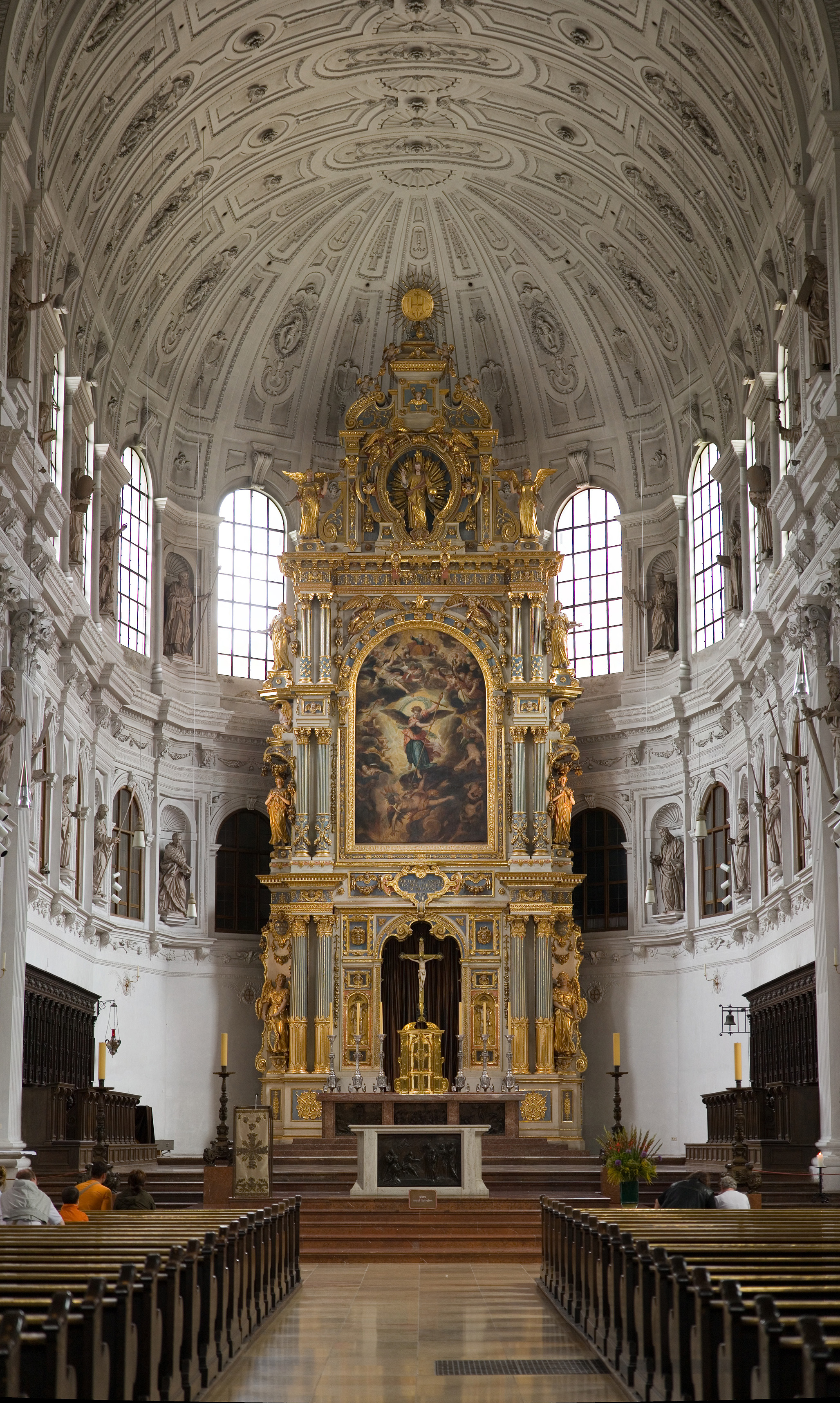
Courtesy of Jeffrey Tucker's magnificant new blog Chant Cafe (do yourself a favour and read it regularly), we have this telling piece about how, without Gregorian Chant, the Catholic people have no voice, coming from Father Ruff at Pray Tell. It could have been written yesterday. But it wasn't; the date is 1936:
Orate Fratres
February 22, 1936 NO. 4
WHY PEOPLE DO NOT LIKE GREGORIAN CHANT
IT is a well-known fact that the chant of the Church is not appreciated. Everyone who has been connected in some capacity or other with its restoration will bear witness to this statement. But no one really likes to admit it. It seems strange that, thirty-two years after the demand of the saintly Pius X for a return to the sacred chant, such wide-spread prejudices still prevail. This is the more painful, because Catholics are decidedly slower than non-Catholics in realizing the value of a treasure in their keeping.
Whereas here and there (and at that oftener than one would surmise) those outside the fold are curious to know about it, those of the flock are in general very reluctant to show any genuine interest. While a "Guild of Protestant Organists," or the department of music of some secular university, or again some musical group, will professa sincere eagerness to penetrate the charm of Gregorian melodies, Catholic institutions and societies (not to speak of parishes), have ignored the fact, sometimes even contemptuously, that there is such a thing as an art called Gregorian. Some readers who have not gone through the hard grind of introducing the chant, wonder, perhaps suspiciously, at this frank statement; but it would be convincingly vindicated by all teachers who have tried in some way or other to labor in the barren field. No illusion can prevail against such an acknowledgment; and it will serve the restoration of liturgical music better than a proud denial of guilt. Remedy can begin only where there is consciousness of the evil.
Why should it be within the Church herself that the chant is today mostly discredited? If there is an intrinsic value in Gregorian art, we have utterly failed to make it one with our religious concepts and our actual religious experiences. And thus we ask ourselves if the problem of the chant is not just as much of a religious as of a musical nature? This has long been our personal conviction. In other words, if our people cannot give vent to their inmost religious sentiments through the chant, it is because these sentiments have taken a direction entirely estranged from the inspiration of the chant. A break between the chant and our religious sentiment does not prove the chant wrong; it proves that we are wrong. For the chant was the most authentic utterance of religious experience in the early centuries.
It is deplorable that so far nothing has been able to overcome the prejudice against the chant, at least to a marked degree. It has, indeed, been welcomed in a few places; but in the majority of churches and chapels there is not even heard the faintest echo of its wondrous strains. We can by no means say that the chant is the general vehicle of Catholic devotion; in very few places indeed has its authority prevailed to the point where it is made the main source of inspiration in Catholic services. The chant was perhaps by "mission" the "voice of the Church"; it is not any longer the "voice of the people." And having lost its tradition, the people have truly no voice at all which can be claimed Catholic.
The most intruding vulgarity has invaded the temple, and holds fast against the most courageous attempts towards the restoration of the chant-attempts which, indeed, have been multiplied during the past twenty years. Many came to the rescue of the dishonored chant; paleographic science has vindicated its glorious authenticity and its unique place in the evolution of musical art; men of genius and taste have marvelled at its simple beauty; schools have opened their portals to students eager to learn about its beauty and form; demonstrations have proved that it can enhance, by its own power, the greatness of our liturgical services. But the choir loft has remained estranged.
Although the authority of the Church is unchallenged by the opposition, both of these have been traveling in parallel ways without ever meeting in open clash. While the decrees of the Holy See and the ordinances of the ordinaries have repeated or interpreted the principles of the Motu proprio with an ever increasing clearness, choir and people alike have been drifting along carefree and forgetful. And perhaps sheer authority will never give back to the faithful the voice which they have lost. Chant is not to be confused with a matter of faith. Were it such it could be enforced through penalty; but such is not likely ever to be the case.
Pius X was the first to realize this difference. This he expressed in his introductory letter to the Cardinal Vicar of Rome, when he insisted on having obedience prompted by the knowledge of the motives which command a reintroduction of the chant into Catholic life. Undoubtedly Catholics do not like it because they do not appreciate it. And until they are educated to like and enjoy it, it is unreasonable to hope that they will sing the chant.
Therefore, instead of deploring sine fine this sad lack of appreciation, let us survey the groups which make up Catholic opinion in the matter. After we have studied them, remedial plans can be suggested. Proceeding from the altar to the choir-loft, we will meet the clergy, the children, the congregation, and the mixed choir.
The restoration of the chant depends largely on the stand taken towards it by the clergy. We take this opportunity to mention this attitude though our doing so requires respectful criticism. Would it be offending in any way to say that the clergy at large does not profess an enthusiastic admiration for the chant? Is it not true that priests in general are not crediting Gregorian melodies with being the "supreme form of liturgical music" and doubt very much its practicability? Such a skeptical attitude has its excuse: most members of the clergy never received a good foundation in the knowledge of the chant, and many have been quite disgusted with the failure of their loyal attempts to introduce it in their churches.
However, one would not be bold today in asking the following questions: "What would eventually be the vote of the clergy, should a free poll be organized on the question of restoring or rejecting the chant from our liturgical services?" "Can it be said that a concerted effort' has been attempted by an organized priesthood to bring about the restoration commanded by the Holy See?" "Is the study of Gregorian chant still a side-line or rather (what it should be) a main feature of the program of education in our minor and major seminaries?" Whatever answer you give, blame or excuse, it remains evident that the lack of efficient leadership among the clergy in this matter is apt to have a disastrous influence on the opinion formed by the laity. And this is sufficient to diagnose the most important cause of the great difficulties encountered in the work of restoration.
Close to the sanctuary we meet the children. And what they feel about the chant is a very important matter. Their opinion is likely to be free from unjust prejudice, and everyone is conscious that it has an important influence on the future. American children show a delightful openness of heart towards the chant. You may call to the witness-stand all those who have ever worked with them in any State and none will deny this optimistic affirmation.
Exception made for rare, forlorn places, and even there, they always respond to an intelligent presentation by a soulful rendition. Children never dislike the chant, and are prompt to express both their lovely appreciation of it as well as their sharp criticism of vulgar sacred music.
This attitude calls to mind the ex are infantium of the psalm. More than once we had to learn from the little ones what our sophistication or indifference had forgotten and sometimes forsaken. Before the children discovered for us the chaste beauties of the chant, they brought back into the world true Eucharistic life. And their spontaneous return to charming Gregorian songs was preceded by their intimate friendship with Jesus in the divine Eucharist. Now then, we have the experimental proof that like or dislike of the sacred chant is more a religious than a musical problem.
The congregation presents a more complex attitude: it is neither "likes" nor "dislikes." It is the same apathy into which the loss of liturgical cooperation has brought them. How could they be expected to sing with pleasure the musical expression of a prayer which has no longer any meaning for them, especially since they have been gradually reduced to mere onlookers and listeners? This attitude is more or less passive; but all pastors who have tried to overcome it know how hard they have to fight and how many times they have to retreat before a new effort. However, the faithful in the pews appreciate the chant. It has been a repeated experience with the writer that if you do not advertise Gregorian chant with the undiplomatic publicity that it is the music imposed by the Church, but just prepare a service well with a group, many comments will attest that the congregation is pleased. And they all will emphasize that "it was very prayerful and soul-stirring." We have had so far but a single inscance to the contrary; it came from a "high-society center."
It is in the choir-10ft that the enemy is entrenched as in a fortress. Oftentimes the pastor looks on his choir as his crux, and rightly so, though he may at times forget the good will, the regular attendance, the fidelity of many members. The choir members are not to be blamed; the institution itself is the deep-rooted evil. It has grown and outworn itself into a spirit entirely opposed to the essential objectives of a liturgical choir. It is neither religious nor musical. A religious, a liturgical, a parochial spirit are usually well-nigh impossible with the mode of enrollment, the lack of religious functioning, the location for singing; a musical spirit cannot be formed with the usual repertoire of vulgarities or secondrate music which has been for so long the lot of Catholic choirs.
Add to that the sore fact that many of those who assume (or have to assume) the mission of directing the choir are not prepared to exercise a real authority to educate their group. Their musicianship and their knowledge of the liturgy are too elementary. Unfortunately, improvised musical directors, unless they be humble enough (and some are indeed), will either discredit the chant which they do not appreciate or will ruin it by lack of real presentation. And even when they do fulfill their task, they will encounter many difficulties which at times look insuperable to the most courageous pioneer.
From the examination of groups which make up this criticism, as well as from general considerations, we may sum up the reasons why the chant is not liked, or positively disliked:
1. The loss of that special spiritual feeling which comes only with the experience of liturgical life.
2. The lack of positive leadership impossible to many priests who did not have the opportunity to study the sacred chant welt
3. The passive attitude of the laity in the liturgical services.
4. The incomplete formation of many of our choir-directors.
5. The deformed spirit of our mixed choirs.
The picture looks dark. Perhaps it is well to see it thus. But there is a very bright spot among the shadows, and so the situation is much more hopeful than is our description of it. It will be the object of the entire series of these articles until next Advent to propose remedies. We ask the reader patiently to wait for them.
ERMIN VITRY, O.S.B.
Thursday, 8 July 2010
Sexual Abuse: Plus ca change...
Courtesy of Mercator.net and Massimo Introvigne:
How the Nazis engineered a paedophile priests scare
 In 1937 propaganda minister Joseph Goebbels organized a campaign to discredit the Catholic Church after Pope Pius XI severely criticised the Nazi regime.
“There are cases of sexual abuse that come to light every day against a large number of members of the Catholic clergy. Unfortunately it’s not a matter of individual cases, but a collective moral crisis that perhaps the cultural history of humanity has never before known with such a frightening and disconcerting dimension. Numerous priests and religious have confessed. There’s no doubt that the thousands of cases which have come to the attention of the justice system represent only a small fraction of the true total, given that many molesters have been covered and hidden by the hierarchy.”
An editorial from a great secular newspaper in 2010? No: It’s a speech of May 28, 1937, by Joseph Goebbels (1897-1945), Minister of Propaganda for the Third Reich. This speech, which had a large international echo, was the apex of a campaign launched by the Nazi regime to discredit the Catholic Church by involving it in a scandal of pedophile priests.
Two hundred and seventy-six religious and forty-nine diocesan priests were arrested in 1937. The arrests took place in all the German dioceses, in order to keep the scandals on the front pages of the newspapers.
On March 10, 1937, with the encyclical Mit brennender Sorge, Pope Pius XI (1857-1939) condemned the Nazi ideology. At the end of the same month, the Nazi Ministry of Propaganda headed by Goebbels launched a campaign against the sexual abuses of priests. The design and administration of this campaign are known to historians thanks to documents which tell a story worthy of the best spy novels.
In 1937, the head of the counter-espionage service of the German military was Admiral Wilhelm Canaris (1887-1945). He became gradually anti-Nazi, and at the time was maturing the convictions which led him to organize the failed assassination attempt against Hitler in 1944, following which he was hanged in 1945. Canaris disapproved of Goebbels’ maneuver against the Church, and instructed a Catholic lawyer named Josef Müller (1878-1979) to carry to Rome a series of highly secret documents on the subject.
In different phases, Müller – before he was arrested and sent to the Dachau extermination camp, where he survived, and later became the post-war Minister of Justice in Bavaria – carried the secret documents to Pius XII (1876-1958), who asked the Society of Jesus to study them.
With the approval of the Secretary of State, the study of the Nazi plot against the Church was entrusted to the German Jesuit Walter Mariaux (1894-1963), who had inspired an anti-Nazi organization in Germany called “Pauluskreis.” He was later prudently sent as a missionary in Brazil and in Argentina. There, as leader of the Marian Congregation, he exercised his influence over an entire generation of lay Catholics, among whom was the noted Brazilian Catholic thinker Plinio Corrêa de Oliveira (1908-1995), who attended his group in São Paulo. In 1940, in London in English and in Argentina in Spanish, Mariaux published two volumes on anti-Catholic persecution by the Third Reich under the pseudonym “Testis Fidelis.” They contained over seven hundred pages of documents with comments, which aroused great emotion in the entire world.
The expression “moral panic” was only coined by sociologists in the 1970s to identify a social alarm created artificially, by amplifying real facts and exaggerating their numbers through statistical folklore, as well as “discovering” and presenting as “new” events which in reality are already known and which date to the past. There are real events at the base of the panic, but their number is systematically distorted.
Even without the benefit of modern sociology, Goebbels responded to the encyclical Mit brennender Sorge in 1937 with a textbook case of the creation of a moral panic.
As always in moral panics, the facts are not totally invented. Prior to the encyclical there were some cases in Germany of abuse of minors. Mariaux himself considered a religious in the school of Bad Reichenall guilty, as well as a lay teacher, a gardener and a janitor, who were condemned in 1936, although he believed the sanction imposed by the Ministry of Public Instruction in Bavaria – revoking the authorization to run scholastic institutes of four religious orders – to be entirely disproportionate, and he linked it to the desire of the regime to undercut Catholic schools. Also in the case of the Franciscans of Waldbreitbach, in Rhineland, Mariaux was open to the hypothesis that the accused were guilty, although later historians have not excluded the possibility that they were framed by the Nazis.
The cases, which were few, but real, produced a very strong reaction from the episcopate. On June 2, 1936, the Bishop of Münster – Blessed Clemens August von Galen (1878-1946), who was the soul of Catholic resistance to Nazism, and who was beatified in 2005 by Benedict XVI – had a declaration read at all the Sunday Masses in which he expressed “pain and sadness” for these “abominable crimes” that “cover our Holy Church with ignominy.” On August 20, 1936, after the events at Waldbreitbach, the German episcopate published a joint pastoral letter in which they “several condemned” those responsible and underlined the cooperation of the Church with the tribunals of the state.
By the end of 1936, the severe measures taken by the German bishops in reaction to these very few cases, some of which were doubtful, seemed to have resolved the real problems. Quietly, the bishops also pointed out that among teachers in the state schools and in the very youth organization of the regime, the Hitler Youth, the cases of condemnations for sexual abuses were much more numerous than among the Catholic clergy.
It was the anti-Nazi encyclical of Pius XI that led to the great campaign of 1937. Mariaux proved it publishing highly detailed instructions sent by Goebbels to the Gestapo, the political police of the Third Reich, and above all to journalists, just a few days after the publication of Mit brennender Sorge, inviting them to “reopen” the cases from 1936 and also older cases, constantly recalling them to public opinion. Goebbels also ordered the Gestapo to find witnesses willing to accuse a certain number of priests, threatening them with immediate arrest if they didn’t collaborate, even if they were children.
The proverbial phrase “there’s a judge in Berlin,” which in German tradition indicates trust in the independence of the court system from the political power of the moment, applied – within certain limits – even in the Third Reich. Of the 325 priests and religious arrested after the encyclical, only 21 were condemned, and it’s all but certain that among them some were falsely accused. Virtually all of them ended up in extermination camps, where many died.
The effort to discredit the Catholic Church on an international scale through accusations of immorality and pedophilia among priests, however, did not succeed.
Thanks to the courage of Canaris and his friends, and to the persistence of the Jesuit detective Mariaux, the truth was already out during the war. The perfidy of the campaign of Goebbels aroused more indignation than the eventual guilt of some religious. The father of all moral panics in the area of pedophile priests blew up in the hands of the Nazi propagandists who had tried to organize it.
Massimo Introvigne is an Italian sociologist of religion. He is the founder and managing director of the Center for Studies on New Religions (CESNUR). This is a translation of his article in the Italian newspaper L’Avvenire (April 16). Reprinted with permission.
How the Nazis engineered a paedophile priests scare
“There are cases of sexual abuse that come to light every day against a large number of members of the Catholic clergy. Unfortunately it’s not a matter of individual cases, but a collective moral crisis that perhaps the cultural history of humanity has never before known with such a frightening and disconcerting dimension. Numerous priests and religious have confessed. There’s no doubt that the thousands of cases which have come to the attention of the justice system represent only a small fraction of the true total, given that many molesters have been covered and hidden by the hierarchy.”
An editorial from a great secular newspaper in 2010? No: It’s a speech of May 28, 1937, by Joseph Goebbels (1897-1945), Minister of Propaganda for the Third Reich. This speech, which had a large international echo, was the apex of a campaign launched by the Nazi regime to discredit the Catholic Church by involving it in a scandal of pedophile priests.
Two hundred and seventy-six religious and forty-nine diocesan priests were arrested in 1937. The arrests took place in all the German dioceses, in order to keep the scandals on the front pages of the newspapers.
On March 10, 1937, with the encyclical Mit brennender Sorge, Pope Pius XI (1857-1939) condemned the Nazi ideology. At the end of the same month, the Nazi Ministry of Propaganda headed by Goebbels launched a campaign against the sexual abuses of priests. The design and administration of this campaign are known to historians thanks to documents which tell a story worthy of the best spy novels.
In 1937, the head of the counter-espionage service of the German military was Admiral Wilhelm Canaris (1887-1945). He became gradually anti-Nazi, and at the time was maturing the convictions which led him to organize the failed assassination attempt against Hitler in 1944, following which he was hanged in 1945. Canaris disapproved of Goebbels’ maneuver against the Church, and instructed a Catholic lawyer named Josef Müller (1878-1979) to carry to Rome a series of highly secret documents on the subject.
In different phases, Müller – before he was arrested and sent to the Dachau extermination camp, where he survived, and later became the post-war Minister of Justice in Bavaria – carried the secret documents to Pius XII (1876-1958), who asked the Society of Jesus to study them.
With the approval of the Secretary of State, the study of the Nazi plot against the Church was entrusted to the German Jesuit Walter Mariaux (1894-1963), who had inspired an anti-Nazi organization in Germany called “Pauluskreis.” He was later prudently sent as a missionary in Brazil and in Argentina. There, as leader of the Marian Congregation, he exercised his influence over an entire generation of lay Catholics, among whom was the noted Brazilian Catholic thinker Plinio Corrêa de Oliveira (1908-1995), who attended his group in São Paulo. In 1940, in London in English and in Argentina in Spanish, Mariaux published two volumes on anti-Catholic persecution by the Third Reich under the pseudonym “Testis Fidelis.” They contained over seven hundred pages of documents with comments, which aroused great emotion in the entire world.
The expression “moral panic” was only coined by sociologists in the 1970s to identify a social alarm created artificially, by amplifying real facts and exaggerating their numbers through statistical folklore, as well as “discovering” and presenting as “new” events which in reality are already known and which date to the past. There are real events at the base of the panic, but their number is systematically distorted.
Even without the benefit of modern sociology, Goebbels responded to the encyclical Mit brennender Sorge in 1937 with a textbook case of the creation of a moral panic.
As always in moral panics, the facts are not totally invented. Prior to the encyclical there were some cases in Germany of abuse of minors. Mariaux himself considered a religious in the school of Bad Reichenall guilty, as well as a lay teacher, a gardener and a janitor, who were condemned in 1936, although he believed the sanction imposed by the Ministry of Public Instruction in Bavaria – revoking the authorization to run scholastic institutes of four religious orders – to be entirely disproportionate, and he linked it to the desire of the regime to undercut Catholic schools. Also in the case of the Franciscans of Waldbreitbach, in Rhineland, Mariaux was open to the hypothesis that the accused were guilty, although later historians have not excluded the possibility that they were framed by the Nazis.
The cases, which were few, but real, produced a very strong reaction from the episcopate. On June 2, 1936, the Bishop of Münster – Blessed Clemens August von Galen (1878-1946), who was the soul of Catholic resistance to Nazism, and who was beatified in 2005 by Benedict XVI – had a declaration read at all the Sunday Masses in which he expressed “pain and sadness” for these “abominable crimes” that “cover our Holy Church with ignominy.” On August 20, 1936, after the events at Waldbreitbach, the German episcopate published a joint pastoral letter in which they “several condemned” those responsible and underlined the cooperation of the Church with the tribunals of the state.
By the end of 1936, the severe measures taken by the German bishops in reaction to these very few cases, some of which were doubtful, seemed to have resolved the real problems. Quietly, the bishops also pointed out that among teachers in the state schools and in the very youth organization of the regime, the Hitler Youth, the cases of condemnations for sexual abuses were much more numerous than among the Catholic clergy.
It was the anti-Nazi encyclical of Pius XI that led to the great campaign of 1937. Mariaux proved it publishing highly detailed instructions sent by Goebbels to the Gestapo, the political police of the Third Reich, and above all to journalists, just a few days after the publication of Mit brennender Sorge, inviting them to “reopen” the cases from 1936 and also older cases, constantly recalling them to public opinion. Goebbels also ordered the Gestapo to find witnesses willing to accuse a certain number of priests, threatening them with immediate arrest if they didn’t collaborate, even if they were children.
The proverbial phrase “there’s a judge in Berlin,” which in German tradition indicates trust in the independence of the court system from the political power of the moment, applied – within certain limits – even in the Third Reich. Of the 325 priests and religious arrested after the encyclical, only 21 were condemned, and it’s all but certain that among them some were falsely accused. Virtually all of them ended up in extermination camps, where many died.
The effort to discredit the Catholic Church on an international scale through accusations of immorality and pedophilia among priests, however, did not succeed.
Thanks to the courage of Canaris and his friends, and to the persistence of the Jesuit detective Mariaux, the truth was already out during the war. The perfidy of the campaign of Goebbels aroused more indignation than the eventual guilt of some religious. The father of all moral panics in the area of pedophile priests blew up in the hands of the Nazi propagandists who had tried to organize it.
Massimo Introvigne is an Italian sociologist of religion. He is the founder and managing director of the Center for Studies on New Religions (CESNUR). This is a translation of his article in the Italian newspaper L’Avvenire (April 16). Reprinted with permission.
Subscribe to:
Posts (Atom)